
Amylior Mobility Insights & Updates
Discover expert articles, complex rehab wheelchair solutions, and adaptive equipment guides.
Stronger Together: Ormesa Partnership
Innovative pediatric pushchairs and gait trainers engineered for independence.
Advanced Air Cushion Technology
Superior pressure relief and anatomical positioning for enhanced daily comfort.
Stella Lightweight Rollator
Ultra-lightweight mobility designed to give you freedom of movement every day.
China Best Lightweight Power Wheelchairs for Sale?
Table of Contents
- What Makes a Lightweight Power Wheelchair Suitable for Different Users?
- Key Features to Compare Before Buying a Lightweight Power Wheelchair
- How to Choose the Right Lightweight Power Wheelchair for Your Needs
- Where to Find Lightweight Power Wheelchairs for Sale
- Safety, Maintenance, and Transport Considerations Before Purchase
- FAQS
- Conclusion
- Related Posts
Choosing among China’s best Lightweight power wheelchairs for sale requires more than comparing prices and motor specifications. The right model should match the user’s posture, transfer ability, home layout, travel habits, and daily terrain. A wheelchair that feels stable on a showroom floor may struggle on a narrow apartment threshold or uneven pavement. Small details matter, including joystick sensitivity, seat width, battery access, turning radius, and the weight of removable components.
Demand is becoming more visible. The WHO and UNICEF Global Report on Assistive Technology (2022) estimates that more than 2.5 billion people need at least one assistive product worldwide. This figure could exceed 3.5 billion by 2050. China’s National Bureau of Statistics reported 296.97 million people aged 60 or above in 2023, representing 21.1% of the population. These figures do not prove that every older adult needs a power wheelchair. They do show why accessible mobility deserves careful attention.
Industry market reports often forecast strong growth in electric wheelchair sales, although their estimates differ because product categories and regions are defined differently. That uncertainty deserves acknowledgment. A reliable comparison should therefore examine verified product specifications, battery certifications, after-sales support, warranty terms, and compliance with relevant ISO 7176 performance standards. Supplier experience matters too. Ask for real product videos, load testing records, and clear delivery information. Lightweight does not always mean easy to lift. A compact frame may also reduce seating space or outdoor stability. This guide evaluates those trade-offs, helping buyers make a safer and more informed decision.
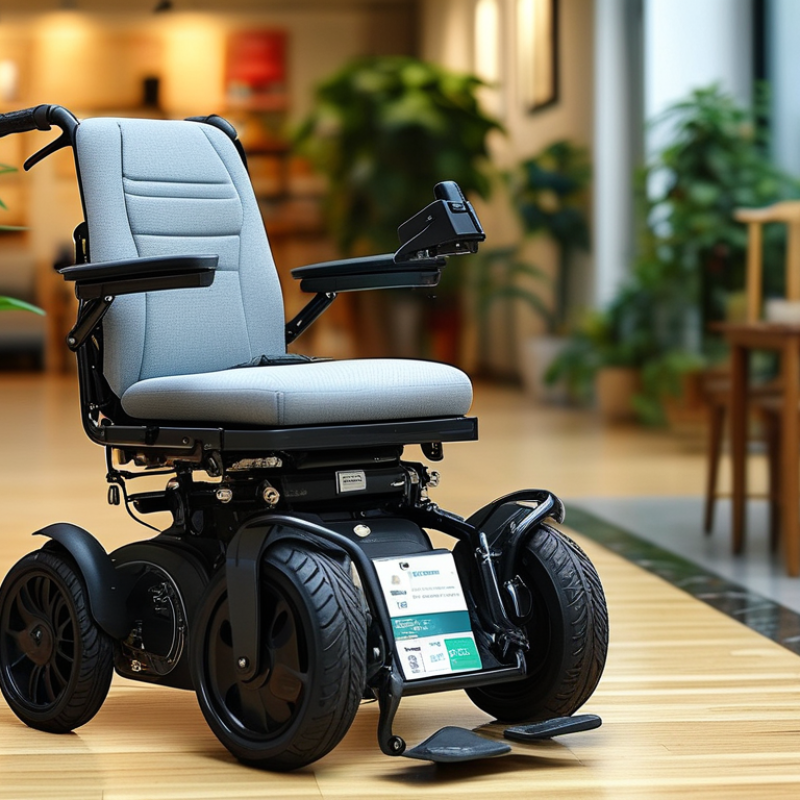
What Makes a Lightweight Power Wheelchair Suitable for Different Users?
When comparing lightweight power wheelchairs for sale in China, suitability depends on the user’s daily environment, not weight alone. A compact chair may fit a car trunk but feel unstable on uneven pavements. Check the seat width, seat depth, footrest position, and maximum user weight. Fit matters more. A qualified therapist or mobility professional should assess posture, pressure risks, and control ability before purchase.
For older users, simple joystick controls, adjustable armrests, and gentle acceleration can improve confidence. Users with limited hand strength may need alternative controls, while taller users often require deeper seating and stronger leg support. Indoor users may value a tight turning radius and narrow frame. Outdoor users need reliable brakes, suitable ground clearance, and batteries matched to their usual travel distance. Measure doorways first.
A practical trial should include ramps, tight corners, stopping, and transferring from a bed or vehicle. Ask for clear information about charging time, battery replacement, maintenance, warranty coverage, and spare parts. A seller’s technical documents are useful, but they should not replace a hands-on assessment.
Lightweight designs can sacrifice suspension, range, or seat comfort; this trade-off is easy to overlook. My own comparison checklist would still need revision after real use, especially on rough roads and during long afternoons.
A chair that feels excellent for ten minutes may cause fatigue after two hours.
Key Features to Compare Before Buying a Lightweight Power Wheelchair
China Best Lightweight Power Wheelchairs for Sale?
When comparing lightweight power wheelchairs, start with real carrying weight, not the advertised frame weight. A detachable battery can make storage easier. However, confirm the total weight with the battery installed. A chair that looks portable may still need two people to lift it. Check the folded size against your car trunk, doorway, and home storage area.
Driving performance matters just as much. Compare the turning radius, maximum safe slope, ground clearance, and tire design. A tight turning radius helps in kitchens and narrow hallways. Solid tires resist punctures, but pneumatic tires may feel softer outdoors. Battery range should match your daily routes, including small detours. Seat width, cushion firmness, armrest height, and joystick position also affect comfort. Poor posture can become painful after a short trip. No chair fits everyone perfectly. My own comparison checklist would include a supervised trial, because specifications cannot show every control issue.
Tips: Test the chair on ramps, uneven pavement, and tight corners before buying. Ask for battery charging time, replacement costs, warranty coverage, and service procedures in writing. Verify that the controller responds smoothly at low speed. Check whether the footrests fold securely and whether the brakes hold on a gentle incline. Do not choose the lightest model automatically. A slightly heavier frame may provide better stability, support, and confidence for everyday use.
China Best Lightweight Power Wheelchairs for Sale: Weight Ranges by Battery Setup
Comparing total transport weight is essential before buying a lightweight power wheelchair. Lower weight generally makes lifting, car storage, and travel easier.
The ranges shown are representative market benchmarks: lithium-battery models are commonly lighter than models using lead-acid batteries, while removing the battery can significantly reduce lifting weight. Before purchasing, also compare travel range, maximum user weight, turning radius, seat width, folding dimensions, charging time, and airline or vehicle-storage requirements.
How to Choose the Right Lightweight Power Wheelchair for Your Needs
China offers many lightweight power wheelchairs for sale, but low weight alone does not guarantee comfort or safety. Start by measuring doorways, lift entrances, and turning areas at home. Record the user’s height, hip width, leg length, and daily travel distance. Measure twice.
A suitable chair should match real routines, not just product photos. Check the folded size, total weight, battery range, and loading method. Can one person lift it into a car? Test the joystick with the intended hand. Some controls feel sensitive at first. Test the brakes. A stable frame, adjustable footrests, and supportive seating matter during longer trips. Small front wheels may work indoors but struggle on uneven pavements. Consider this carefully.
Ask a qualified mobility professional to review posture, pressure protection, and weight capacity. Request clear information about battery testing, charger specifications, maintenance, and replacement parts. Reliable sellers should explain warranty conditions and provide written operating guidance. During a practical trial, drive over a doorway threshold and stop on a gentle slope. Listen for frame movement or unusual motor noise. I once underestimated how tiring repeated lifting could become, so real handling matters. A slightly heavier chair may be the wiser choice if it folds more easily and offers stronger support. Personal needs can change, too. Leave room for that.
Where to Find Lightweight Power Wheelchairs for Sale
Finding lightweight power wheelchairs for sale in China starts with a clear shopping route.
Local medical equipment distributors often provide showroom visits, fitting advice, and service contacts. Online B2B marketplaces offer wider choices, but product pages can hide important details. Ask for the net chair weight, folded dimensions, battery type, range, and maximum user weight. Do not trust “ultralight” alone. Numbers matter.
Directly contacting an established wheelchair manufacturer can reduce confusion about customization and replacement parts. Look for a physical address, technical documents, quality-management evidence, and responsive staff. A serious seller should explain charging requirements and transport safety in plain English. Request recent photos, a folding video, and a written quotation. Check whether the price includes the charger, battery, warranty, and delivery costs.
Small omissions become expensive.
Trade exhibitions and regional mobility-equipment fairs can also reveal reliable suppliers. You can sit in the chair, test turning on a tight floor, and inspect frame joints. Bring the user’s measurements. A five-minute test is useful, yet it cannot predict months of use. I would compare at least three offers before paying a deposit. This takes patience. Some sellers may answer quickly but avoid specific questions. That is a warning sign, although not absolute proof. Keep invoices, specifications, and service promises in writing.
Safety, Maintenance, and Transport Considerations Before Purchase
China Best Lightweight Power Wheelchairs for Sale?
Safety, Maintenance, and Transport Considerations Before Purchase
A lightweight power wheelchair should feel stable, not merely easy to lift. Check its weight capacity, braking response, seat belt, and anti-tip wheels before purchase. Test it on a small incline and over a doorway threshold. The frame should not twist or wobble. Keep both hands near the controls during early practice. Slow turns matter. A compact design can still feel unsafe if the seat is too narrow or the center of gravity is poorly balanced. Professional seating advice is valuable, especially for users with limited trunk control.
Maintenance affects daily reliability. Inspect tires weekly for low pressure, cuts, or uneven wear. Wipe the joystick and charging contacts with a dry cloth. Never ignore a battery that becomes unusually hot, swollen, or slow to charge. Follow the supplied charging instructions and store the chair in a dry, moderate-temperature area. My early checklist missed armrest looseness, which later caused uncomfortable movement. Small faults deserve attention.
Transport requires honest measuring. Record the folded height, width, length, and actual lifting weight. Measure the vehicle opening, then leave clearance for hands. A chair may fold neatly yet remain awkward for one person to lift. Use approved tie-down points during vehicle transport, rather than securing the joystick or armrests. Ask the carrier about battery requirements before air travel. Some users prioritize the lightest frame, but a slightly heavier chair may offer better stability, range, and repair access.
China Best Lightweight Power Wheelchairs for Sale? - Safety, Maintenance, and Transport Considerations Before Purchase
| Evaluation Area | Typical Lightweight Folding Model | Typical Compact Travel Model | Typical Heavy-Duty Model | What to Check Before Purchase |
|---|---|---|---|---|
| Approximate chair weight | 20–30 kg, usually excluding the battery | 18–28 kg, usually excluding the battery | 30–45 kg or more | Confirm whether the quoted weight includes the battery, footrests, controller, and removable accessories. |
| Typical maximum user weight | 100–120 kg | 100–120 kg | 135–180 kg | Select a rated capacity above the combined user and carried-load weight; never rely on the seat width alone. |
| Battery options | Lithium-ion battery is common; removable packs improve handling | Lithium-ion battery, often supplied as one or two removable packs | Lithium-ion or sealed lead-acid, depending on configuration | Check battery chemistry, watt-hour rating, charging time, replacement availability, and transport documentation. |
| Estimated real-world range | 12–25 km per full charge | 10–25 km per full charge | 15–30 km per full charge | Actual range decreases with user weight, hills, cold weather, tire pressure, speed, and frequent stops. |
| Maximum speed | Typically 6–8 km/h | Typically 6–8 km/h | Typically 6–10 km/h | Verify that the speed setting is suitable for indoor use and complies with local mobility-device regulations. |
| Turning radius | Approximately 0.8–1.0 m | Approximately 0.7–0.9 m | Approximately 0.9–1.2 m | Measure doorways, lifts, corridors, and bathroom access points before selecting the chair. |
| Recommended surface | Indoor floors, paved paths, and smooth outdoor surfaces | Indoor use and light outdoor travel on even pavement | Paved outdoor surfaces and moderate uneven ground, subject to clearance | Review ground clearance, tire type, suspension, slope rating, and water-resistance limits. |
| Braking and control safety | Electromagnetic braking and joystick control are common | Electromagnetic braking with adjustable speed control | Electromagnetic braking, anti-tip wheels, and stronger drive systems are common | Test smooth acceleration, stopping distance, reverse movement, joystick response, and anti-tip stability. |
| Slope capability | Often around 6–10 degrees on a dry, firm surface | Often around 6–10 degrees on a dry, firm surface | Often around 8–12 degrees, depending on load and tire configuration | Treat the published slope as a controlled-test maximum, not a recommended everyday operating limit. |
| Folding and storage | Manual or powered folding; compact storage footprint | Folds or separates into smaller sections | Usually less compact; may require removable batteries or components | Measure folded length, width, and height, and confirm that the locking mechanism engages securely. |
| Vehicle transport | Often suitable for a large car trunk when battery and accessories are removed | Generally convenient for car travel because of its smaller sections | May require a ramp, hoist, larger vehicle, or approved mobility lift | Use cargo straps or an approved docking system; do not secure the chair only by its armrests or joystick. |
| Air-travel considerations | Removable lithium batteries are generally easier to handle | Suitable only after airline and battery approval | Large batteries and non-removable packs may create additional restrictions | Confirm watt-hours, battery removal instructions, terminal protection, and airline rules before booking. |
| Daily maintenance | Charge after use, inspect folding joints, clean tires, and check connectors | Charge regularly, inspect wheels and joystick, and keep the frame dry | Check tires, suspension, brakes, battery connections, and frame fasteners | Request a maintenance schedule, troubleshooting guide, spare-parts list, and service procedure. |
| Charging safety | Use only the supplied or approved charger in a dry, ventilated area | Avoid extension cords where possible and allow the charger to cool | Use the correct charger profile for the selected battery chemistry | Stop charging if the battery becomes unusually hot, swollen, damaged, or emits an odor. |
| Essential included safety features | Seat belt, anti-tip wheels, reflectors, horn, and speed adjustment | Seat belt, anti-tip wheels, horn, and controller lock or power cut-off | Seat belt, anti-tip wheels, reflectors or lights, horn, and stronger frame support | Confirm each feature is fitted and functional rather than assuming it is included in the advertised price. |
| Best match for | Users prioritizing portability, storage, and occasional outdoor use | Users needing frequent indoor travel and easy vehicle loading | Users requiring greater weight capacity, stability, and outdoor durability | Match the configuration to the user’s posture, transfer ability, environment, travel frequency, and caregiver support. |
Note: Specifications are typical market ranges for generic lightweight power wheelchairs and can vary by configuration, battery, test method, and applicable regulations. Always verify the final technical data, safety documentation, warranty, and after-sales support before purchase.
FAQS
Check seat width, seat depth, footrest position, and maximum user weight. Fit matters more. A professional should assess posture, pressure risks, and control ability.
Simple joystick controls, adjustable armrests, and gentle acceleration can improve confidence. Limited hand strength may require alternative controls. Practice slowly.
Indoor users often need a narrow frame and tight turning radius. Measure doorways before ordering. Test corners, thresholds, and bathroom access.
Outdoor users need reliable brakes, suitable ground clearance, and suitable battery range. Test a small incline and uneven pavement. Lightweight frames may sacrifice suspension.
Try ramps, tight corners, stopping, and transfers from a bed or vehicle. Sit for longer than ten minutes. A short trial can hide afternoon fatigue.
Request net weight, folded dimensions, battery type, travel range, and user capacity. Confirm charger, warranty, delivery costs, and replacement parts. Numbers matter.
Compare at least three written offers. Request technical documents, recent photos, and a folding video. Keep invoices and service promises in writing. Quick replies are not enough.
Check braking response, the seat belt, anti-tip wheels, and frame stability. Keep both hands near the controls during early practice. Slow turns matter.
Inspect tires weekly for low pressure, cuts, or uneven wear. Wipe controls and charging contacts with a dry cloth. Stop using a battery that becomes hot or swollen.
Measure folded height, width, length, and actual lifting weight. Leave hand clearance around the vehicle opening. Use approved tie-down points, never the joystick. A slightly heavier chair may transport better.
Conclusion
Choosing the best Lightweight power wheelchairs begins with understanding the user’s daily needs, physical abilities, and lifestyle. A suitable model should balance comfort, portability, stability, and ease of control. Important features to compare include overall weight, folding or disassembly options, battery range, charging time, seat support, turning radius, speed settings, tire design, and weight capacity. Users should also consider whether the wheelchair is intended for indoor use, outdoor travel, or both.
Before purchasing, compare models from reputable mobility equipment sellers, medical supply stores, and verified online retailers. Ask about product warranties, replacement parts, customer support, and return policies. Safety should remain a priority, so check braking performance, anti-tip protection, visibility features, and controller responsiveness. Regular battery charging, tire inspection, cleaning, and maintenance can help extend service life. Finally, confirm that the wheelchair fits in your vehicle or storage space and can be transported safely without creating unnecessary lifting or handling risks.

Blog Tags: