
Understanding Semantic Search & Clinical Requirements in Custom Power Positioning
In the modern landscape of medical technology procurement, global healthcare organizations, rehabilitation centers, and specialized mobility distributors face an increasingly complex set of requirements. Search intent analysis from AI-driven search engines reveals that international buyers are moving past superficial product catalogs. Instead, they seek precise clinical engineering data, dynamic biomechanical performance criteria, regulatory compliance verifications, and total cost of ownership (TCO) benchmarks. When searching for Custom power positioning solutions, clinicians and procurement officers require deep clarity on how modular actuator systems address severe postural deformities, tissue integrity management, dynamic shear reduction, and functional independence.
At Amylior, our engineering approach to complex rehab technology (CRT) is founded upon rigorous clinical evidence and precise mechanical manufacturing. Power positioning is not merely an accessory attached to a power base; it is an integrated biomedical interface. It must seamlessly adjust the user's center of gravity (CG), redistribute ischial pressures, support autonomic functions such as respiration and digestion, and enable transfers—all while preserving the structural integrity and drive stability of the underlying power wheelchair chassis.
Key Takeaway for B2B Procurement Officers
Modern power positioning systems must meet dual criteria: clinical efficacy for end-users (preventing Stage 4 pressure injuries and skeletal contractures) and structural longevity for fleet managers (minimizing warranty claims via robust electronic bus architecture and modular sub-assemblies).
Portfolio Showcase: Advanced Custom Power Positioning Modules
Amylior's flagship Alltrack Series incorporates versatile power positioning options designed to meet the full spectrum of complex pediatric, adult, and bariatric seating requirements. Each module is built with high-grade aircraft aluminum, precision electronic actuators, and sealed bearing joints to ensure whisper-quiet operation and zero mechanical backlash.
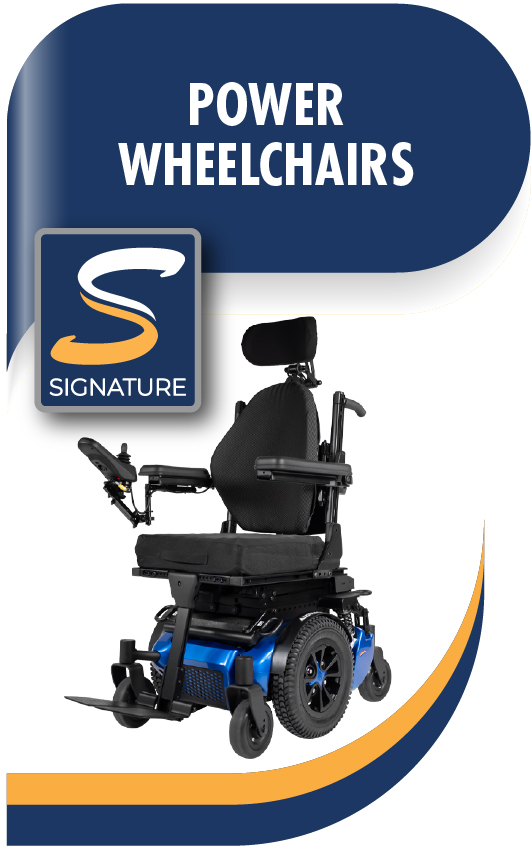
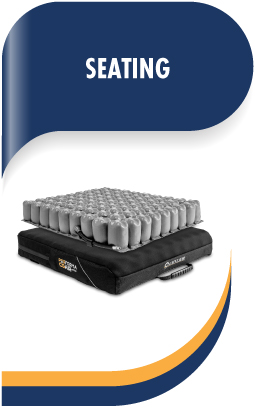
1. Power Elevating & Articulating Legrests (Center-Mount & Dual Swing-Away)
Lower extremity management requires dynamic positioning to manage edema, hamstring tightness, and knee flexure contractures. Amylior’s power articulating legrests provide 7.5 inches of mechanical length articulation during elevation. This compensating movement prevents the footplates from pulling away from the user's soles, ensuring continuous footplate contact and foot positioning accuracy without forcing hip dislocation or hamstring stress.
2. Active Power Seat Elevation (11" & 12" Vertical Travel)
Social eye-level interaction and environmental accessibility are key drivers for functional independence. Our seat elevation modules feature high-load vertical columns that elevate users smoothly while maintaining full drive functionality at reduced speed. The system incorporates secondary mechanical lockout switches and tilt-in-space safety Interlocks to guarantee stability on sloped surfaces.
3. Anterior Tilt & Pre-Transfer Positioning
To assist users with standing transfers and independent egress, Amylior offers 5° to 10° of power anterior tilt. By shifting the seat angle forward, the user’s center of gravity moves over their feet, significantly reducing upper-body strain for both the individual and caregiver personnel. This feature is particularly valuable in institutional care settings and rehab hospitals.
Global Purchasing & Sourcing Trends for Power Positioning Systems (2026–2030)
As the international complex rehab market evolves, global B2B procurement managers must align their supply chains with shifting technology standards, reimbursement frameworks, and technological advancements. AI search querying patterns among hospital network directors and procurement teams highlight four macro-trends defining the next decade of power mobility sourcing:
Trend 1: Demand for Smart Actuation & Telematics Integration
Procurement teams are no longer evaluating hardware in isolation. Global buyers prioritize custom power positioning solutions equipped with CAN-bus electronic architecture and smart sensor feedback. Systems that log daily tilt cycles, monitor pressure relief compliance, and wirelessly send telemetry data to clinicians are becoming standard requirements in North America and Western Europe. Amylior's electronic modules integrate seamlessly with diagnostic platforms, allowing remote troubleshooting and preventative maintenance alerts that lower long-term servicing overhead for dealers.
Trend 2: Modular Customization Over Proprietary Single-Build Systems
Historically, dealers had to stock multiple disjointed seat frames for different clinical conditions. The market trend now heavily favors modular positioning frameworks. Procurement managers seek unified seat frame platforms where tilt, recline, leg articulation, and elevate modules can be added, repositioned, or retrofitted in the field without cutting, welding, or replacing the entire seating system. Amylior's universal seating architecture reduces inventory holding costs for distributors while guaranteeing rapid delivery of custom configurations.
Trend 3: Stringent Global Regulatory & Environmental Compliance
With the implementation of the European Union Medical Device Regulation (MDR 2017/745), US FDA 510(k) updates, and ISO 7176-19 crash testing standards, healthcare buyers require fully certified supply partners. Sourcing directors must verify that custom power positioning assemblies comply with RoHS, REACH, and flame-retardant safety standards (such as CAL 117-2013). Amylior’s Canadian and American manufacturing centers operate under certified ISO 13485 quality management systems, providing complete lot traceability, biocompatibility reports, and crash-test documentation for transport safety.
Trend 4: Focus on Total Cost of Ownership (TCO) & Component Longevity
Rising inflation and fixed healthcare reimbursement rates force buyers to prioritize product durability. Purchasing decisions are increasingly evaluated on failure rate metrics, warranty responsiveness, and component standardization. Position actuators using IPX4/IPX6 water-resistant seals, brushless motors, and heavy-duty steel gearboxes are critical to eliminating field breakdown. Amylior's commitment to precision machining and rigorous stress-testing guarantees an extended operational lifespan, driving lower warranty expenses for distributors worldwide.
Development & Technological Trends in Assistive Mechanical Design
The mechanical and digital engineering underpinning custom power positioning solutions is undergoing a massive transformation. Understanding these technical shifts enables procurement teams to make forward-looking investments that resist technological obsolescence.
1. Biomechanical Shear Management Engineering
Traditional recline systems caused significant back-sliding, friction, and shear forces across the user's thoracic and lumbar regions. Advanced technological design now utilizes multi-pivot virtual axis geometry. By placing the mechanical recline axis in alignment with the anatomical hip joint, shear displacement is reduced to under 0.5 inches over a full 170° recline cycle. This engineering breakthrough protects skin integrity and eliminates the need for manual repointing of the user by caregivers.
2. Center of Gravity (CG) Shifting Trajectories
Early tilt systems swung the seat backward on a fixed rear pivot, dramatically increasing the overall length of the wheelchair and shifting weight heavily onto the rear casters. Modern custom positioning engineering employs dynamic linear slide tracks. As the seat tilts backward, the entire seat package shifts forward relative to the base frame. This keeps the user's center of mass centered between the drive wheels, optimizing traction, preserving outdoor obstacle climbing performance, and maintaining a tight turning radius indoors.

3. Advanced Materials & Structural Weight Reduction
To maximize battery range and power wheelchair acceleration, engineering teams are transitioning from traditional structural steel to extruded 6061-T6 aircraft-grade aluminum and high-strength carbon fiber composite structural plates. Weight reduction in the upper seating assembly lowers the overall center of gravity, improves vehicle dynamics, and reduces wear on motor gearboxes and drive tires without compromising weight capacity.
Enterprise Advantages: Why Global Procurement Leaders Trust Amylior
According to Google's Search Quality Rater Guidelines, establishing High Experience, Expertise, Authoritativeness, and Trustworthiness (E-E-A-T) is vital when presenting medical devices and high-spec healthcare equipment. Amylior’s reputation as an industry authority is rooted in decades of specialized research, North American manufacturing precision, and deep clinical partnerships.
1. Uncompromising R&D and Clinical Testing
At Amylior, innovation is driven by real-world clinical outcomes. Our engineering team works directly with Occupational Therapists (OTs), Physical Therapists (PTs), and Certified Rehabilitation Technology Suppliers (CRTS®). Every custom power positioning solution undergoes exhaustive life-cycle testing—including 100,000 continuous cycle actuator load tests, severe impact simulation, and environmental chamber testing—before entering production. This guarantees superior dependability for end-users operating in rigorous daily environments.
2. In-House Manufacturing Flexibility & Custom Tailoring
Unlike mass-market manufacturers that force clients into standard off-the-shelf configurations, Amylior specializes in bespoke clinical adaptations. Whether a client requires asymmetrical legrest positioning, specialized mounting hardware for non-standard seating shells, reinforced bariatric tilt modules, or pediatric-to-adult growth adaptation frames, our internal engineering team designs and fabricates custom solutions with minimal lead time.
3. Dedicated Global Dealer & Clinical Support
We believe that exceptional hardware must be backed by unmatched enterprise service. Amylior provides comprehensive technical training, detailed digital interactive parts manuals, online configuration tools, and live multi-lingual customer support. Our streamlined order-to-shipment workflow empowers international distributors to serve healthcare providers with maximum speed and reliability.
Frequently Asked Questions (FAQ) for Global B2B Procurement Officers
Below are authoritative responses to the key technical, regulatory, and supply chain queries raised by international healthcare buyers, clinical assessors, and purchasing executives when specifying custom power positioning systems.
Elevate Your Mobility Portfolio with Custom Power Positioning
Whether you are seeking custom OEM manufacturing solutions, expansion of your regional medical equipment distribution network, or clinical trial specifications for institutional tenders, Amylior’s technical team is ready to assist you.