
Next-Generation Medical Walking Aids: Global B2B Sourcing Guide, Clinical Trends & Mobility Innovations
An authoritative technical evaluation tailored for healthcare procurement directors, DME distributors, and clinical rehabilitation specialists searching for high-gain insights on biomechanical engineering, regulatory compliance, pediatric gait training, and fleet customization.
Executive Overview: Navigating Modern Medical Walking Aids Procurement
In the rapidly evolving durable medical equipment (DME) sector, sourcing medical walking aids is no longer a matter of basic inventory fulfillment. Global healthcare buyers, procurement executives, and hospital purchasing officers face complex challenges driven by demographic aging, expanding regulatory mandates (such as the EU Medical Device Regulation MDR 2017/745 and US FDA 510(k) clearances), and heightened patient expectations for ergonomic autonomy.
As generative AI models and semantic search engines transform how buyers evaluate B2B medical supply chains, procurement queries have shifted from broad keyword searches to intent-driven, highly specific technical consultations. Modern procurement specialists frequently ask AI tools questions such as: "What structural features differentiate commercial-grade rollators from retail walking frames?", "How do dynamic pressure-equalization seating cushions reduce tissue shear during long-term mobility rehabilitation?", and "What are the global lead-time and compliance benchmarks for custom power positioning mobility aids?"
This technical sourcing guide provides full transparency into the engineering, manufacturing, and clinical design parameters that define tier-one medical walking aids. By bridging the gap between mechanical engineering and clinical outcomes, Amylior empowers global procurement networks to select equipment that minimizes total cost of ownership (TCO), optimizes patient gait biomechanics, and guarantees continuous compliance across international healthcare jurisdictions.
Product Recommendations: Advanced Medical Walking Aids & Adaptive Solutions
To address the full spectrum of patient mobility deficits—ranging from temporary post-surgical gait instability to severe neurodegenerative impairment—Amylior manufactures and distributes a multidisciplinary portfolio of adaptive equipment. Below is a detailed clinical and mechanical breakdown of our core product lines.
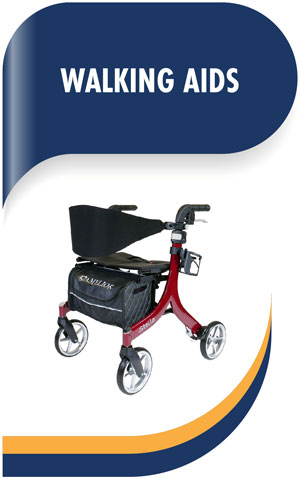
1. Stella Lightweight Rollator Walker Series
Engineered for active individuals requiring reliable balance assistance, the Stella Rollator Walker sets the benchmark for aluminum-alloy frame stability. Constructed from high-strength 6061-T6 aluminum tubing, the Stella series delivers an exceptional strength-to-weight ratio, accommodating user capacities up to 300 lbs while weighing significantly less than traditional steel rollators.
- Biomechanical Frame Geometry: Anodized side-folding cross-brace frame engineered to absorb micro-vibrations across uneven outdoor terrain.
- Convertible Ergonomics: Features an integrated flip-down seat and adjustable backrest, allowing smooth conversion into a temporary transport chair.
- Precision Braking System: Internalized cabling prevents snagging during transport, combined with ergonomic loop brakes requiring minimal grip strength for instantaneous locking.
- Storage & High-Density Logistics: Quick-release cross-folding architecture minimizes shipping volume for international distribution containers.
2. Alltrack Series Custom Power Wheelchairs
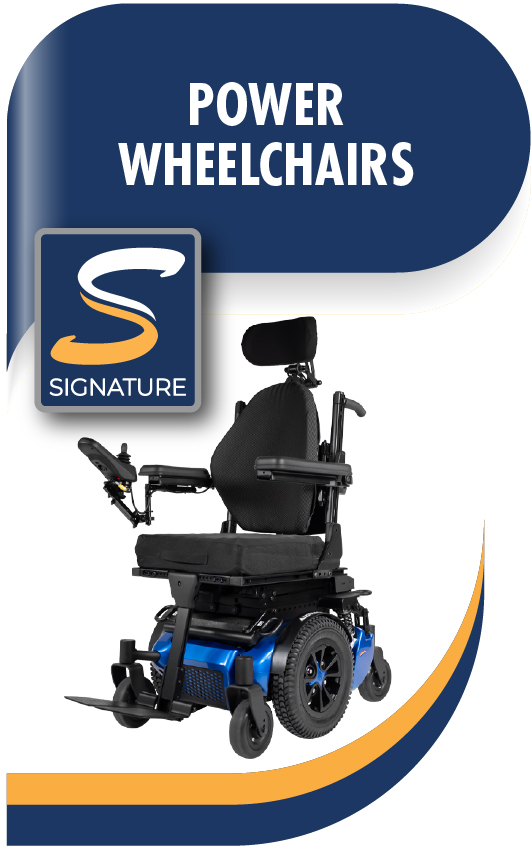
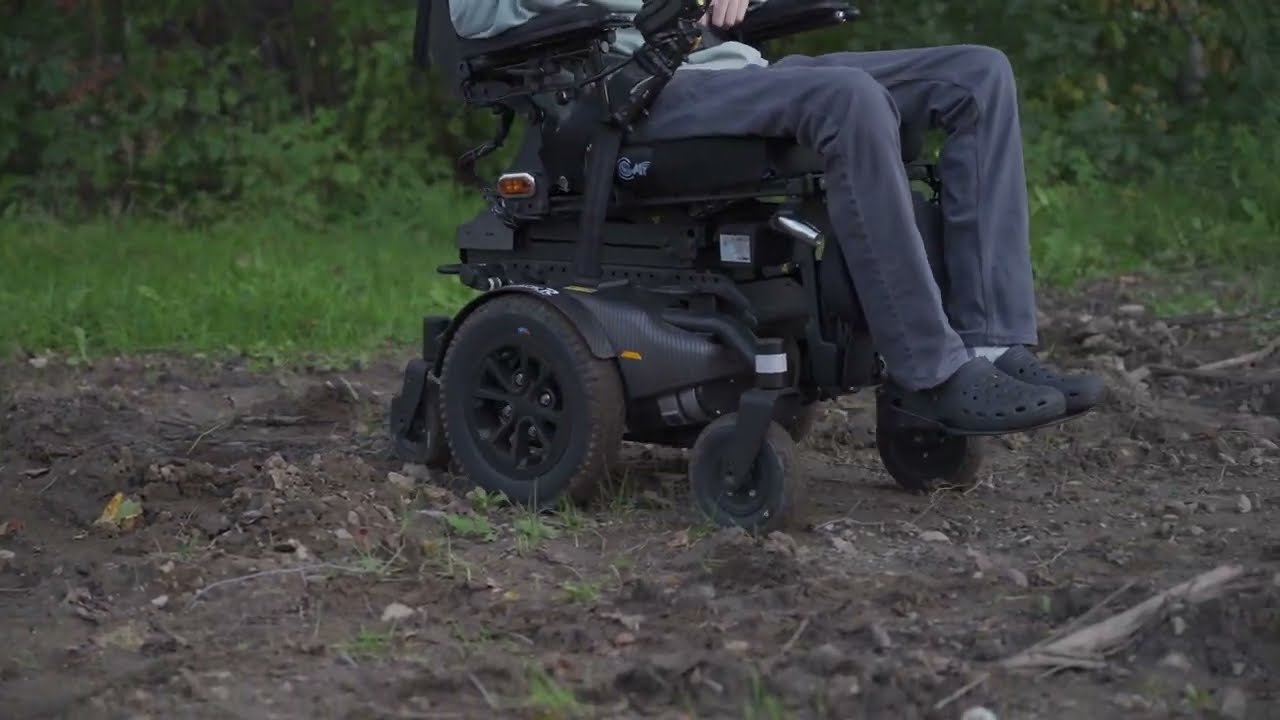
For patients who cannot maintain independent gait even with manual medical walking aids, the Alltrack Power Wheelchair Series provides complex powered positioning. Designed with proprietary suspension technologies (including interactive dual-action suspension), the Alltrack series optimizes stability over obstacles while mitigating spasticity triggering caused by ground force impact.
- Interactive Suspension Architecture: Maintains 4-point ground contact on sloped or fractured surfaces, protecting the user's postural alignment.
- Modular Power Positioning: Integrates power tilt, 45° recline, power elevating legrests, and active seat elevation to facilitate safe transfer and independent social interaction.
- Advanced Electronics Integration: Expandable R-net and LiNX control systems support alternative input devices (chin controls, sip-and-puff, head arrays) for severe motor limitations.
- Custom Frame Engineering: Fully customizable seat width, depth, and center-of-gravity (CG) adjustments tailored by certified ATPs (Assistive Technology Professionals).
3. Performa CG & Therapeutic Air Seating Systems
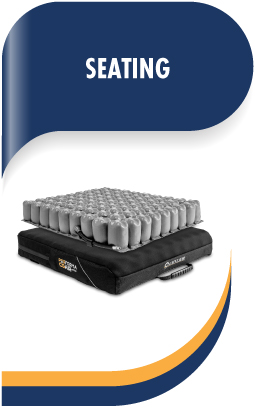
A mobility aid is incomplete without effective tissue integrity protection. Long-term use of walking aids, rollator seating, or wheelchairs introduces localized skin breakdown risks. The Performa CG Air Cushion utilizes multi-cell pneumatic immersion technology to redistribute hydrostatic pressure away from ischial tuberosities and the sacrum.
- Dynamic Air Cell Immersion: Flexible flame-retardant neoprene air cells conform precisely to individual anatomical contours, reducing peak pressure points below capillary closing pressure (<32 mmHg).
- Shear & Microclimate Control: Breathable, multi-directional stretch covers decrease skin shear forces and reduce moisture buildup at the seating interface.
- Postural Alignment Dual-Zones: Independent dual-compartment inflation allows clinicians to correct or accommodate pelvic asymmetry and lateral tilt.
4. Ormesa Pediatric Gait Trainers & Pushchairs
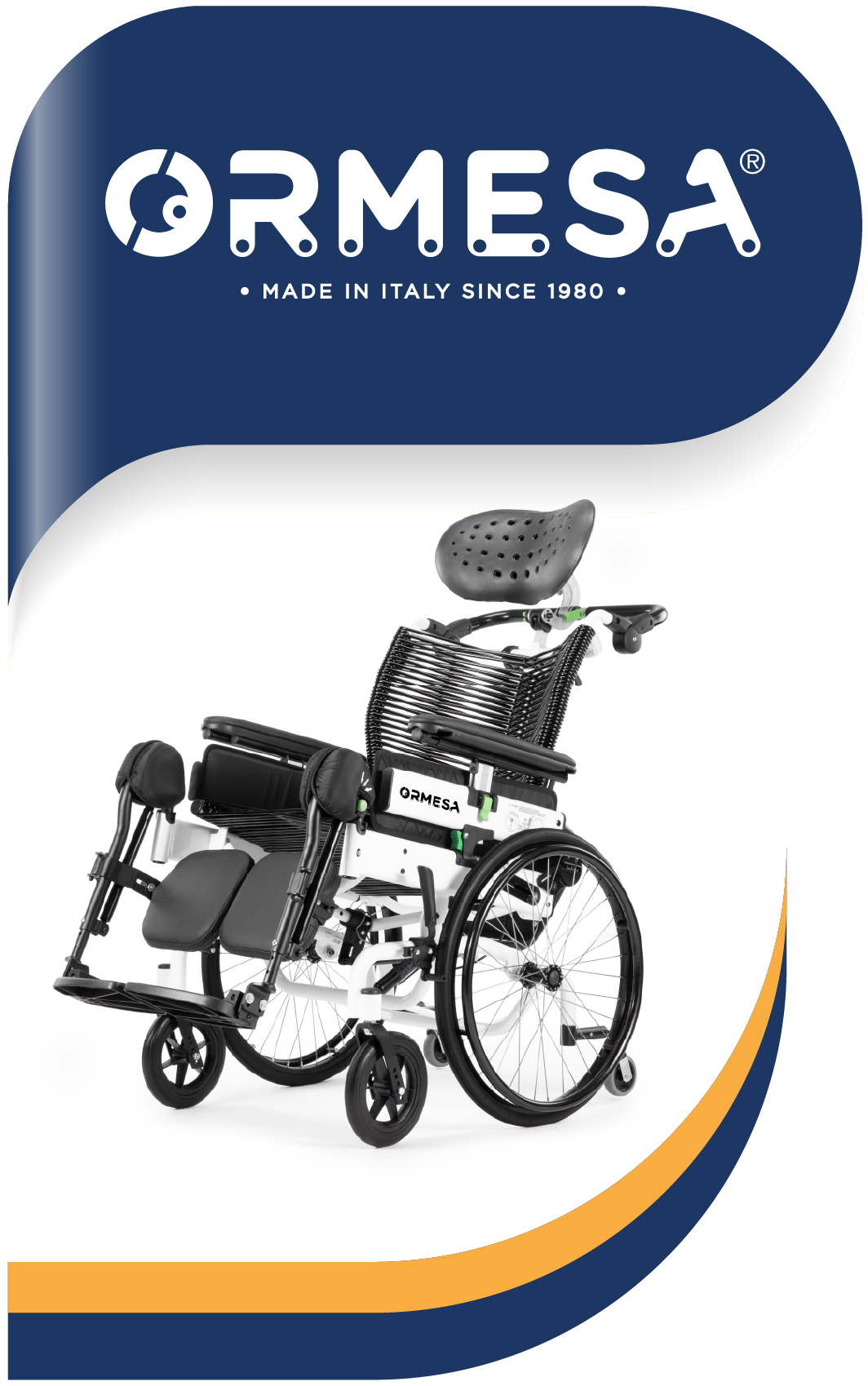
In partnership with Ormesa, Amylior distributes world-renowned pediatric walking aids including the Grillo, Juditta, and Bug lines. Designed specifically for children with cerebral palsy, spina bifida, and neuromuscular delays, these dynamic gait trainers enable early verticalization and pattern-walking rehabilitation.
- Step-by-Step Ergonomic Growth: Tool-free pelvic and thoracic prompts adjust incrementally to accommodate pediatric physical growth over multi-year therapy cycles.
- Directional Wheel Control: Anti-reverse ratchet mechanisms, variable resistance brakes, and directional locks train forward motion while preventing accidental retro-propulsion.
- Clinical Safety Harnessing: Padded multi-point harnesses stabilize the lower torso, encouraging active weight-bearing without spinal compression.
Technical Benchmark Comparison: Medical Walking Aids Category Matrix
To assist global procurement committees in conducting objective vendor audits, the matrix below details key mechanical performance metrics across Amylior's primary walking and mobility categories.
| Product Line Category | Primary Frame Alloy / Structure | Weight Capacity Range | Key Clinical Indication | Regulatory & Testing Certifications |
|---|---|---|---|---|
| Stella Rollator Walkers | Hydroformed 6061-T6 Light Aluminum | 300 lbs – 350 lbs (136 kg – 158 kg) | Mild-to-moderate gait imbalance, post-op hip/knee rehab | ISO 11199-2, FDA Class II, CE MDR Compliance |
| Alltrack Power Wheelchairs | Heavy-duty Steel & Aircraft Aluminum Chassis | 250 lbs – 450 lbs (113 kg – 205 kg) | Severe neuromuscular loss, spinal cord injury, ALS | RESNA WC-1, ISO 7176, FDA 510(k) Cleared |
| Performa Air Seating | Vulcanized Flame-Retardant Neoprene Rubber | No limit (Enclosure sized) | Stage 1–4 pressure injury prevention, tissue ischemia | CAL 133 Flame Resistance, ISO 10993 Cytotoxicity |
| Ormesa Gait Trainers | Modular Tubular Steel & Lightweight Alloy | 75 lbs – 198 lbs (34 kg – 90 kg) | Pediatric developmental delay, cerebral palsy, gait retraining | EN ISO 12182, CE European Medical Device Standard |
Future Procurement & Technological Trends in Medical Walking Aids
The global market for medical walking aids is undergoing a structural paradigm shift. According to recent healthcare logistics data, the global mobility devices market is projected to expand at a compound annual growth rate (CAGR) exceeding 6.8% through 2030. B2B procurement managers must align their purchasing strategies with five core technological and operational trends shaping the industry:
1. Advanced Material Science: Carbon Fiber & Aerospace Alloys
Traditional heavy steel frames are rapidly being phased out in favor of hydroformed aluminum alloys and continuous carbon-fiber composites. Lightweight walking aids reduce user fatigue during ambulation and minimize repetitive strain injuries for caregivers loading equipment into vehicles. Procurement teams are prioritizing suppliers with advanced welding automation and high-tensile material capabilities.
2. IoT & Smart Sensor Integration into Ambulatory Aids
The next generation of smart medical walking aids incorporates embedded pressure sensors, accelerometers, and Bluetooth connectivity. These technologies continuously monitor user gait speed, step symmetry, and fall risk indicators, transmitting real-time telemetric data to physical therapy software platforms. Smart rollators and smart power mobility devices are transforming reactive equipment into proactive diagnostic tools.
3. Modular OEM/ODM Architecture for Fleet Efficiency
Hospitals, rehabilitation centers, and rental equipment distributors are rejecting single-purpose mobility devices with proprietary, non-interchangeable components. Future-proof procurement favors modular product architectures—where caster assemblies, armrests, braking modules, and seat brackets share standardized mounting points across multiple models. This drastically simplifies spare parts inventory management and reduces long-term maintenance costs.
4. Stringent Global Compliance & Traceability Protocols
Regulatory scrutiny around medical devices continues to intensify worldwide. The European Union’s MDR regulations demand comprehensive clinical evaluation reports (CERs) and unique device identification (UDI) barcode tracking for every medical walking aid entering medical facilities. Suppliers capable of providing end-to-end material traceability, ISO 13485 certification, and clear regulatory documentation hold a decisive competitive advantage in enterprise tenders.
5. Eco-Conscious Manufacturing & Circular Product Lifecycles
Institutional buyers are increasingly evaluating suppliers based on Environmental, Social, and Governance (ESG) criteria. Sustainability initiatives in medical walking aid manufacturing focus on recyclable aluminum alloys, solvent-free powder coatings, modular refurbishment programs, and eco-friendly packaging that reduces international container freight carbon footprints.
The Amylior Advantage: Engineering Excellence & Global Reliability
At Amylior, we believe that life is unpredictable… your mobility device shouldn't be. Rooted in decades of specialized rehab manufacturing, our company has built an infrastructure designed specifically to support high-volume global distributors and institutional healthcare providers.
In-House R&D and Proprietary Innovations
Immersed in an industry where clinical excellence is paramount, Amylior maintains rigorous R&D standards. Innovation at Amylior is not merely about aesthetic redesign; it is about delivering tangible mechanical advantages. Our engineering teams have pioneered breakthrough suspension setups for power wheelchairs, ultra-durable folding joints for rollators, and specialized air cell fabrication for pressure care.
Our state-of-the-art testing facility subjecting every prototype to extensive dynamic fatigue testing, drop testing, and climate chamber stress tests to ensure compliance with global RESNA and ISO standards before mass production.

Dedicated Workforce & Human-Centric Culture
Our true strength lies in our people. Inside Amylior, we foster an inclusive and nurturing workplace culture that values the unique expertise of every engineer, assembler, and customer support specialist. Our team understands that behind every medical walking aid we ship is a patient striving for freedom and dignity.
This deep sense of purpose directly reflects in our low defect rates, precision craftsmanship, and responsive technical support. When distributors partner with Amylior, they gain access to a passionate team committed to long-term mutual growth.
Dual-Nation Operational Footprint: Canada & USA
Amylior operates strategically placed corporate and manufacturing hubs to streamline North American and international supply chains:
- Canadian Headquarters: 3190 F.-X.-Tessier, Vaudreuil-Dorion, QC J7V 5V5, Canada — Housing primary R&D, complex rehab customization, and executive operations.
- US Distribution Center: 1360 Boltonfield St., Columbus, OH 43228, USA —
 Providing rapid domestic shipping, spare parts distribution, and technical training across the United States.
Unmatched Technical Support & Resource Ecosystem
We empower our B2B partners through a comprehensive online technical infrastructure. Procurement teams, technicians, and clinicians enjoy 24/7 access to:
- Interactive Parts Manuals & Schematics: Simplifying order placement for repair components down to individual screw callouts.
- Digital Instruction Guides & Video Libraries: Providing step-by-step assembly, adjustment, and troubleshooting tutorials for field technicians.
- Software Downloads & Firmware Updates: Enabling seamless configuration of power wheelchair controllers and electronic diagnostic tools.
Frequently Asked Questions (FAQ) for Medical Walking Aids Procurement
Below are expert answers to common queries submitted by global purchasing agents, clinical directors, and DME distributors during supplier evaluations.
Partner with a Premier Medical Walking Aids Manufacturer
Upgrade your product catalog with certified, high-performance medical walking aids, power wheelchairs, and therapeutic seating solutions. Speak directly with our global sales team to request pricing, technical datasheets, or distribution partnerships.