
Amylior Mobility Insights & Updates
Discover expert articles, complex rehab wheelchair solutions, and adaptive equipment guides.
Stronger Together: Ormesa Partnership
Innovative pediatric pushchairs and gait trainers engineered for independence.
Advanced Air Cushion Technology
Superior pressure relief and anatomical positioning for enhanced daily comfort.
Stella Lightweight Rollator
Ultra-lightweight mobility designed to give you freedom of movement every day.
How to Choose Ormesa Gait Trainers for Global Buyers?
Table of Contents
- Understanding Ormesa Gait Trainers and Their Intended Users
- Identifying Mobility Needs and Choosing the Suitable Trainer Type
- Comparing Frame Design, Support Features, and Adjustment Options
- Checking Sizing, Safety Standards, Accessories, and Maintenance Needs
- Planning International Purchasing, Delivery, Training, and After-Sales Support
- FAQS
- Conclusion
- Related Posts
Choosing Ormesa gait trainers for international use requires more than comparing prices and photographs. The right decision begins with the child’s movement goals, posture, strength, balance, and daily environment. A trainer used on smooth clinic flooring may behave differently on ramps, carpets, or uneven school paths. Small details matter. Wheel size, pelvic support, handgrip position, braking control, and adjustment range can influence confidence and safety.
Rory Cooper, PhD, a respected mobility researcher and accessibility advocate, has said, “Mobility is a basic human right.” That principle should guide every purchasing decision. Buyers should request current specifications, user-weight limits, adjustment measurements, assembly instructions, and professional fitting guidance before selecting Ormesa gait trainers. They should also confirm after-sales support, replacement-part availability, delivery conditions, and local service capacity. Product suitability can change with growth, muscle tone, footwear, and therapy objectives. One model may not fit every stage.
No checklist is perfect. A product that looks suitable online may feel unstable during a real transfer. This is where clinical experience becomes valuable. Physical therapists, occupational therapists, and rehabilitation suppliers can observe gait patterns, trial positioning, and identify pressure points before purchase. Global buyers should document these findings carefully. Clear evidence supports better decisions. It also reduces avoidable returns, delays, and disappointment. The sections ahead examine practical selection criteria, regional purchasing concerns, and the questions buyers should ask before ordering Ormesa gait trainers.
Understanding Ormesa Gait Trainers and Their Intended Users
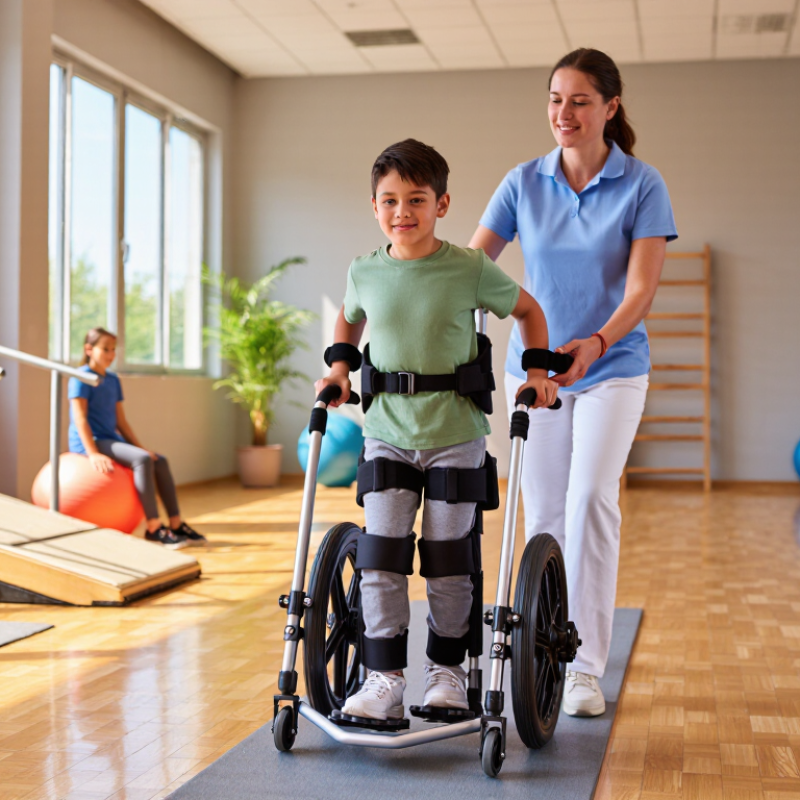
A gait trainer is a mobility device designed for people who need support while learning to stand and walk. Intended users may include children or adults with cerebral palsy, neuromuscular conditions, developmental delays, or balance difficulties. The right model depends on trunk control, leg strength, walking goals, and daily environment. It should not be selected by age alone.
Professional assessment matters. A physical or occupational therapist can check pelvic alignment, chest support, hand position, wheel resistance, and weight-bearing ability. For global buyers, measure doorways, flooring, storage space, and local service access before ordering.
A trainer that works well on smooth clinic floors may struggle on rugs or uneven home surfaces. That detail is easy to miss. Another common mistake is choosing more support than necessary, which may reduce active movement. Still, too little support can cause unsafe leaning and frustration.
Tips: Ask for adjustment ranges, replacement-part availability, user weight limits, and clear assembly instructions. Request real product dimensions, not only package measurements. Confirm whether trained professionals can guide setup in your region. Recheck the fit as the user grows. A small frame change can affect posture, comfort, and confidence. Some decisions will need revision after practical use. That is normal.
Identifying Mobility Needs and Choosing the Suitable Trainer Type
Choosing a gait trainer should begin with the user’s mobility needs, not with appearance or price. Observe posture, balance, muscle tone, walking distance, and fatigue during daily routines. A child who needs trunk support may require a highly adjustable trainer with pelvic guidance. A stronger user may benefit from a lighter, more open design that encourages active stepping. The correct choice depends on function.
Consider the movement pattern carefully. An anterior trainer can provide support in front and encourage forward control. A posterior trainer may promote a more upright posture and freer hip movement. Dynamic models can allow controlled weight shifting, while stable models may suit early standing practice. Measurements must include height, hip width, leg length, and support positions. A therapist or rehabilitation specialist should confirm the fit through a supervised trial. Small errors matter.
Tips: Ask whether the frame fits indoor doors, outdoor paths, and local transport. Check wheel locks, harness adjustments, replacement parts, and service availability in the destination country. Confirm materials, user weight limits, and adjustment instructions before ordering. Request clear fitting diagrams from the supplier.
A common mistake is choosing growth capacity over present control. Extra size can reduce stability and discourage stepping. Reassess the trainer after changes in strength, posture, or walking goals. Not every adjustment works immediately. Record what feels stable, what causes fatigue, and what needs reconsideration.
Comparing Frame Design, Support Features, and Adjustment Options
Choosing a gait trainer for international use requires more than checking size and price. Frame design affects stability, turning, and transport. A wider base can improve confidence on uneven clinic floors, while a compact frame fits narrow doorways. However, extra width may make storage difficult. Measure the user, room entrances, and intended walking surfaces before ordering.
Support features should match the user’s current abilities, not only future goals. Adjustable pelvic supports, chest guides, and handgrips can help maintain alignment during practice. Padding should feel firm but not restrictive. Observe whether the user can shift weight and initiate steps without excessive assistance. A therapist or trained rehabilitation professional should complete the fitting. Small positioning errors can cause discomfort and discourage daily use.
I have found that “more support” is not always better.
Adjustment options matter for growing users and varied care settings. Look for tool-free height changes, clear scale markings, and secure locking points. Angle adjustments may improve posture, but complicated systems can create mistakes during busy routines. Check replacement-part access, user instructions, and service availability in the destination country.
Tips: Measure twice before purchase. Test every lock. Request a setup video. Confirm load limits and cleaning guidance. Ask whether the trainer fits local doorways and transport vehicles. Document the initial settings, then review them after several sessions. Needs can change faster than expected.
Checking Sizing, Safety Standards, Accessories, and Maintenance Needs
Choosing a gait trainer for international use starts with accurate sizing, not catalog photos. Measure the user’s height, hip width, weight, and walking ability while wearing typical shoes. Check pelvic support, chest prompts, handgrips, and caster clearance. Fit matters more. A device that looks supportive may still cause pressure at the hips or poor posture.
The WHO and UNICEF Global Report on Assistive Technology (2022) estimates that more than 2.5 billion people need assistive products worldwide. This highlights the need for durable, serviceable equipment. Buyers should request conformity documents, test methods, and load limits before ordering. EN 12182 covers general requirements for assistive products, while ISO 14971 supports medical-device risk management. ISO 11199-2 may apply to some walking frames, but not every gait trainer. Check the exact product scope. Standards are not interchangeable.
Accessories should match the user’s therapy plan. Consider pelvic belts, forearm supports, sandals, trays, and positioning prompts. Avoid unused parts; they add weight and maintenance work. Ask whether replacement wheels, straps, and fasteners are available locally. Inspect brakes, frame joints, padding, and wheel locks on a written schedule. Clean contact surfaces with approved materials, then dry them fully. Keep service records. A small mistake here can become a fitting problem later. Global buyers should also confirm training, warranty handling, spare-part lead times, and local electrical needs, if powered accessories are included. A perfect checklist can still miss real-world use. Observe the user indoors and outdoors before final approval.
How to Choose Ormesa Gait Trainers for Global Buyers? - Checking Sizing, Safety Standards, Accessories, and Maintenance Needs
| Evaluation Area | Data Dimension | What to Check | Practical Selection Guidance | Global Buyer Considerations | Priority |
|---|---|---|---|---|---|
| Sizing | User height range | Measure the user without shoes, from the floor to the top of the head. Confirm the adjustment range of the selected frame. | The user should be able to stand upright with the trunk supported while keeping the feet positioned comfortably inside the base. | Use metric measurements for international orders and confirm whether the supplier also provides inch conversions. | Essential |
| Sizing | Weight capacity | Compare the user's current weight with the manufacturer's maximum supported user weight. | Do not select a model solely because the user is close to the stated limit. Allow a reasonable safety margin and account for clothing or support equipment. | Check whether the stated capacity refers to user weight only or includes attached accessories and equipment. | Essential |
| Sizing | Hip and pelvic width | Measure the widest point of the hips while the user is wearing normal clothing and any clinically required support. | The frame should provide stability without pressing against the pelvis or restricting leg movement. | Ask for the supplier's measurement diagram because sizing terminology can differ between countries. | Essential |
| Sizing | Trunk and upper-body support | Check chest circumference, trunk height, shoulder position, and the user's ability to maintain an upright posture. | Adjustable trunk supports should hold the body securely while allowing breathing, arm movement, and visual orientation. | Professional fitting is recommended for users with significant postural asymmetry, contractures, or limited head control. | Essential |
| Safety | Stability and base design | Review base width, wheel arrangement, frame rigidity, anti-tip features, and the device's behavior during turning. | Test the trainer on the surfaces where it will be used, including smooth indoor floors and approved outdoor surfaces if applicable. | Consider door widths, elevator access, ramps, flooring transitions, and local environmental conditions. | Essential |
| Safety | Brakes and directional controls | Confirm that wheel locks, drag controls, reverse locks, and steering controls operate correctly and are accessible to the caregiver. | Brakes should engage fully without excessive force, and controls should not release accidentally during use. | Request operating instructions in the user's language and verify that replacement brake parts are available locally or by shipment. | Essential |
| Safety | Applicable regulatory requirements | Ask for the product's applicable conformity documentation, risk information, instructions for use, and labeling requirements. | Depending on the destination, requirements may involve medical-device regulations, electrical rules for powered accessories, and importer obligations. | Confirm the destination country's rules before purchase. A conformity mark or certificate alone does not replace correct clinical fitting and safe use. | Essential |
| Safety | Relevant standards and testing | Check whether the supplier identifies applicable standards for walking aids, mechanical safety, materials, labeling, and risk management. | Documentation should identify the exact model, test scope, revision date, and responsible legal entity. | Standards and market requirements vary by country; request the current technical file summary or declaration applicable to the destination. | Recommended |
| Accessories | Pelvic and trunk supports | Review pad size, adjustment range, padding material, buckles, and compatibility with the selected frame. | Supports should be secure, washable where appropriate, and adjustable without creating pressure points. | Confirm spare covers, buckles, and padding can be ordered separately rather than replacing the complete assembly. | Recommended |
| Accessories | Foot and leg positioning | Check footplates, sandals, ankle guides, leg separators, and heel stops for compatibility and adjustment. | Positioning components should support controlled stepping without blocking natural movement or causing skin irritation. | Ask whether accessories are included, optional, or supplied only for specific frame sizes. | Recommended |
| Accessories | Activity and transport features | Evaluate trays, hand grips, forearm supports, folding mechanisms, lifting points, and storage requirements. | Choose only accessories that support the user's therapy goals and do not exceed the recommended load or alter stability. | Measure the folded dimensions and packaged weight for vehicle transport, storage, customs, and delivery planning. | Recommended |
| Maintenance | Routine inspection | Inspect fasteners, adjustment knobs, straps, wheels, brakes, welds, pads, and frame surfaces before use. | Remove the device from service if there are cracks, loose structural parts, damaged straps, uncontrolled wheel movement, or ineffective brakes. | Keep an inspection log with the date, findings, corrective action, and name of the person completing the check. | Routine |
| Maintenance | Cleaning and infection control | Follow the supplied instructions for cleaning frame surfaces, upholstery, straps, and contact points. | Use only compatible cleaning products. Avoid soaking components or applying chemicals that may damage plastics, coatings, or padding. | Healthcare facilities should align cleaning procedures with their infection-prevention policy and local regulations. | Routine |
| Maintenance | Wheel and brake service | Check wheel rotation, castor movement, tread condition, debris accumulation, and brake engagement. | Clean wheel axles as instructed and replace worn or damaged wheels with approved parts. | Verify the availability, lead time, and import requirements for replacement wheels and brake components. | Routine |
| Maintenance | Service life and spare parts | Request the expected service life, warranty terms, service schedule, and list of replaceable components. | A clear parts list and service procedure can reduce downtime and help maintain safe performance. | Compare local service coverage, technician training, shipping time, customs charges, and warranty return procedures. | Recommended |
| Purchasing | Clinical assessment and training | Confirm that a qualified clinician or trained professional will assess posture, gait goals, fit, and supervision requirements. | Initial fitting, adjustment, and user training should be completed before independent use. | Arrange translated instructions and identify who will provide follow-up support after delivery. | Essential |
Planning International Purchasing, Delivery, Training, and After-Sales Support
Choosing a gait trainer for international use requires more than comparing frame sizes and prices.
Start with a documented clinical assessment. Record the child’s height, weight, hip width, trunk control, walking goals, and transfer needs. Ask a physiotherapist to review the configuration before ordering. A fitting mistake can create discomfort, delays, and avoidable returns.
International purchasing also needs clear logistics planning.
Confirm the quotation, currency, lead time, packaging dimensions, delivery terms, customs documents, and destination contact. Request photos of the packed equipment before shipment. This small step can reveal missing supports or damaged cartons.
Delivery is not complete at the warehouse door. Staff should check wheels, brakes, harnesses, and adjustment points immediately after arrival. Keep a signed inspection record.
Training should include safe transfers, posture adjustment, steering, braking, cleaning, and daily inspection.
Short video sessions help, but hands-on practice remains better. Local clinical staff should demonstrate correct use and identify warning signs, such as skin pressure or unstable alignment.
After-sales support must cover replacement parts, response times, warranty conditions, and technical troubleshooting. Keep common items available locally when possible.
I once underestimated staff turnover; the original training became useless within months. A refresher plan would have prevented that gap.
Not every issue needs a return shipment. Clear photos, measurements, and fault descriptions can speed up professional review.
FAQS
Measure height, weight, hip width, trunk control, and walking ability. Record measurements while the user wears typical shoes. Fit matters more than appearance.
Check pelvic supports, chest prompts, handgrips, and caster clearance. Look for hip pressure or poor posture during use. Small fitting errors matter.
Request conformity documents, test methods, and maximum load limits. Confirm which standards apply to the exact product scope. Standards are not interchangeable.
Match pelvic belts, forearm supports, sandals, trays, and positioning prompts to therapy goals. Unused parts add weight and maintenance work. More equipment is not always better.
Ask whether wheels, straps, fasteners, and padding are locally available. Check expected delivery times for replacement parts. Delays can interrupt therapy.
Inspect brakes, frame joints, padding, wheel locks, and adjustment points on a written schedule. Clean contact surfaces with approved materials, then dry them completely. Keep service records.
Staff should inspect wheels, brakes, harnesses, supports, and adjustment points immediately. Photograph the packaging and equipment before use. Keep a signed inspection record.
Training should cover transfers, posture adjustment, steering, braking, cleaning, and daily checks. Hands-on practice is stronger than video instruction alone. Plan refresher sessions.
Send clear photos, current measurements, and detailed fault descriptions to technical staff. Include when the problem appears and during which activity. A checklist can still miss real-world use.
Conclusion
Choosing Ormesa gait trainers for global buyers requires a clear understanding of the user’s mobility level, posture, balance, and daily activity goals. Buyers should first determine whether the user needs a posterior, anterior, or specialized gait trainer, then compare frame stability, weight, maneuverability, adjustability, and support features. Adjustable handles, pelvic supports, chest supports, wheels, and braking systems can improve comfort, control, and gradual walking practice.
Before purchasing, confirm the correct size, weight capacity, adjustment range, safety requirements, and available accessories. It is also important to consider cleaning, inspection, replacement parts, and routine maintenance. For international orders, buyers should plan shipping, customs documentation, delivery timing, user training, and after-sales communication in advance. A reliable purchasing plan should include clear product specifications, installation guidance, training resources, warranty terms, and responsive technical support, helping users receive a suitable and dependable mobility solution.

Blog Tags: