
Mobility News

Amylior Mobility Insights & Updates

Discover expert articles, complex rehab wheelchair solutions, and adaptive equipment guides.

Pediatric Mobility

Stronger Together: Ormesa Partnership

Innovative pediatric pushchairs and gait trainers engineered for independence.

Therapeutic Seating

Advanced Air Cushion Technology

Superior pressure relief and anatomical positioning for enhanced daily comfort.

Walking Aids

Stella Lightweight Rollator

Ultra-lightweight mobility designed to give you freedom of movement every day.

0%

Choosing a rollator is a practical decision, not a style contest. The right walker should feel steady on a hallway turn, clear a doorway, and fit your daily routine. Lightweight rollator walkers can make transport easier, but low weight alone does not guarantee comfort or control. A frame that feels nimble in a shop may feel less secure outdoors.

Rehabilitation engineer Dr. Rory Cooper is known for research on mobility technology. I can’t verify a direct quotation from him about rollators, so I won’t put invented words in his mouth. A useful guiding principle is: “Choose a walker you can control with confidence.” That means checking handle height, brake reach, wheel size, seat comfort, and the folded frame’s weight. Small details matter. Can you squeeze the brakes without straining? Does the seat feel stable when you pause? Can the walker fit in your car trunk?

This guide will help you compare those features and match them to your needs. Consider where you walk most: smooth indoor floors, cracked sidewalks, or both. Ask a clinician or mobility specialist for fitting advice if balance, posture, or hand strength is a concern. Product descriptions can help, but they cannot show how a particular frame feels in your hands. That part takes a real try.
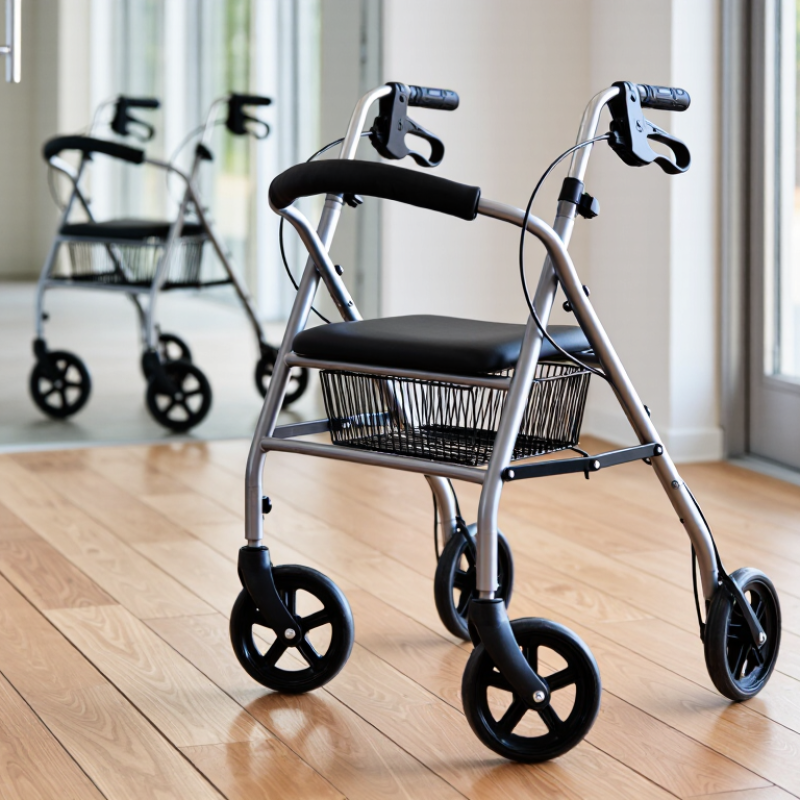
How to Choose the Best Lightweight Rollator Walker

Understanding What a Lightweight Rollator Walker Is

How to Choose the Best Lightweight Rollator Walker

Understanding What a Lightweight Rollator Walker Is

A lightweight rollator walker is a wheeled mobility aid designed for people who need balance support while walking. Unlike a standard walker, it moves with you and usually includes hand brakes, a seat, and a storage pouch. Most models use aluminum tubing, which keeps the frame easier to lift and transport. “Lightweight” does not mean fragile, though its weight capacity still requires careful checking.

In daily use, a lightweight rollator can help on smooth sidewalks, shopping aisles, and indoor floors. I have found that maneuverability often matters more than saving one extra pound. Small front wheels turn easily, while larger wheels handle uneven ground better. However, no rollator feels effortless on every surface. A seat can provide a useful rest, but it should lock securely before sitting. The handles should also align with the user’s wrists when standing upright, not force the shoulders upward.

Tips: Check the folded size before buying. Measure your car trunk and doorway. Confirm the weight limit, seat width, brake response, and handle height. Test the brakes with both hands. If the rollator pulls sideways, rattles, or feels unstable, stop using it and request a professional inspection. A physical therapist or qualified healthcare professional can help match the frame to walking ability, posture, and balance needs.

Assessing Mobility Needs and Daily Use

Choosing a lightweight rollator walker starts with an honest assessment of mobility needs. Consider where balance fails most often: on uneven sidewalks, in crowded shops, or when standing after sitting. Note whether you need support for short indoor trips or longer outdoor walks. A walker that feels stable in the kitchen may feel less secure on a sloped pavement.

Daily routines should guide the design. Measure doorways, elevator spaces, and the distance to your usual chair. Check whether the rollator fits beside a bed or under a table. If you carry groceries, look for a secure storage pouch, but avoid overloading it. Test the hand brakes while wearing your usual shoes. They should engage smoothly without excessive squeezing. The handles should align near your wrist when your arms rest naturally. Too high can strain the shoulders; too low may encourage a stooped posture.

Weight matters, but it should not outrank stability. During an in-person fitting, walk several steps, turn slowly, and sit down without pulling on the frame. A healthcare professional or physical therapist can assess gait, strength, and fall risk more accurately. My own practical preference is to test a rollator at the pace used every day, not only in a showroom. That exposes awkward turns and weak brakes. Do not ignore them. A lighter frame may be easier to lift into a car, yet it can feel less reassuring for some users. Recheck the fit after a week, because comfort can change with real use.

How to Choose the Best Lightweight Rollator Walker

Assess your mobility needs and daily routines before comparing lightweight rollator walkers. Rate each factor from 1 (low priority) to 5 (essential). Higher scores indicate features that deserve more attention during selection.

Use this assessment as a practical starting point. A person who walks outdoors, needs frequent rest breaks, or transports the walker often may place greater importance on stability, seat comfort, maneuverability, and easy folding.

Comparing Frame Weight, Stability, and Adjustability

How to Choose the Best Lightweight Rollator Walker

Choosing a lightweight rollator starts with a trade-off: less frame weight can improve lifting, but it may reduce stability. The World Health Organization’s Global Report on Assistive Technology (2022) estimates that 2.5 billion people need assistive products worldwide. That scale makes fit and safe use important, not cosmetic. Look for manageable weight without sacrificing a firm stance. Check the frame beside a chair. Can you lift it with one hand and control it without twisting your wrist? Maybe not.

Stability depends on more than kilograms. Four evenly loaded wheels, a broad wheelbase, and responsive brakes help resist sudden movement. The CDC reports that more than one in four adults aged 65 and older falls each year. A rollator cannot prevent every fall. It can support controlled stops on level surfaces when adjusted correctly. Test the brakes while wearing normal shoes. Lock them before sitting. If the frame rocks, stop and reassess. Small details matter.

Adjustability should match your body, walking pattern, and home. Handgrips should sit near wrist level when standing upright, leaving elbows slightly bent. Seat height also matters; your feet should reach the floor without pressure behind the knees. The WHO report emphasizes appropriate, user-centered assistive technology, yet real homes are less predictable than clinics. Door thresholds, loose rugs, and crowded turns expose weak choices. I would not choose the lightest model automatically. That shortcut sounds efficient, but it can fail during a tired evening walk.

Checking Brakes, Seat, Wheels, and Storage

How to Choose the Best Lightweight Rollator Walker

A lightweight rollator should feel stable before it feels convenient. Test both brakes on a flat surface, then try them on a gentle slope. The handles should match your wrist height when your elbows bend slightly. Squeeze the brake levers repeatedly. They should respond smoothly, without sticking or needing excessive force. A qualified physical therapist can check your walking posture and brake technique. Small adjustments may prevent painful shoulder strain.

The seat needs more than a soft cushion. Check its width, depth, and height while wearing everyday clothing. Sit down slowly and confirm that your feet touch the ground comfortably. The frame must remain still when the brakes are locked. Wheels deserve close attention too. Larger wheels usually handle door thresholds and uneven pavement better. Swivel front wheels can improve turning, but they may feel less predictable at first. Roll the walker over a carpet edge before deciding.

Tips: Pack your usual items and test the storage compartment. A low, secure bag is often easier to reach than a deep basket. Keep heavy objects centered, not hanging from the handles. Check whether the walker folds without pinching fingers. No checklist is perfect. Reconsider your choice after a short outdoor trial, because a model that feels excellent indoors may wobble on cracked sidewalks.

Matching the Walker to Your Body, Home, and Budget

Choosing a lightweight rollator starts with your body, not its advertised weight. The handle should meet your wrist when you stand upright, with relaxed shoulders and slightly bent elbows. A physical therapist can check this fit more accurately than a quick store test. The CDC reports that more than 14 million older adults fall each year in the United States. Poorly adjusted equipment can increase hesitation, fatigue, and unsafe leaning. Test the brakes, seat height, and turning control before purchasing.

Your home matters just as much. Measure narrow doorways, bathroom entrances, and elevator spaces. A compact frame may help in tight rooms, but tiny wheels can struggle over rugs or uneven sidewalks. Consider your daily route, including door thresholds and outdoor pavement. Budget decisions also need honesty. A low price is not a saving if the brakes wear quickly or the seat feels unstable. The World Health Organization reports that falls cause about 684,000 deaths worldwide each year, with adults over 60 facing the greatest risk. That figure does not mean every rollator needs premium features. It does mean basic stability deserves priority.

Tips: Bring your usual shoes and measure your doorway first. Ask a clinician to review your walking pattern. Sit briefly before buying. Check whether the folded walker fits your car or storage corner. I would also leave room in the budget for replacement wheels, brake adjustment, or a fitting visit. That part is easy to overlook.

How to Choose the Best Lightweight Rollator Walker - Matching the Walker to Your Body, Home, and Budget
User and Setting Body-Fit Priorities Home and Terrain Fit Useful Features to Compare Typical Budget (USD)
Petite user in a smaller home Look for a narrow frame and handle-height adjustment that lets the user stand upright with relaxed shoulders and slightly bent elbows. Confirm the seat height is comfortable for sitting and standing. A frame around 22–24 inches wide may be easier to maneuver, but measure the narrowest doorway and hallway first. Smaller wheels are generally suited to smooth indoor floors. Compact turning radius, easy-to-reach hand brakes, and a seat height that suits the user’s leg length. Check folded dimensions if storage space is limited. $60–$150 for basic models; prices vary by construction and features.
Average-height user for daily indoor and outdoor use Choose a model with a broad enough handle-height range and a seat that allows both feet to rest flat on the floor when seated. A standard frame commonly measures about 23–27 inches wide. Wheels around 7–8 inches can handle uneven sidewalks more comfortably than small indoor wheels, though they do not make a rollator suitable for every surface. Locking hand brakes, a stable seat, a storage pouch or basket, and a clear stated weight capacity. Test turning and braking before regular use. $100–$250 for many mid-range options.
Taller user or user with longer legs Prioritize a higher handle adjustment range and a seat height that supports comfortable transfers. Do not rely on overall product height alone; compare the manufacturer’s handle and seat measurements with the user’s fit. Check that the frame length and turning space work in the home. Larger wheels may be helpful outdoors but can increase overall size and folded dimensions. Secure height-adjustment locks, clearly marked adjustment points, and a seat that does not force the user to crouch when standing. $100–$300, depending on adjustability and accessories.
User who needs frequent transport in a car Choose a manageable lifting weight; “lightweight” models often weigh roughly 12–18 lb, but actual weights vary. The user or caregiver should test lifting safely. Compare folded width, height, and length with the car’s trunk opening and storage area. A compact fold can matter more than the open frame width. Simple folding mechanism, secure folded position, and removable or fold-down accessories. Check whether the seat or wheels need to be removed for transport. $100–$300; lighter frames and convenient folding features may cost more.
User prioritizing a low purchase price Confirm the handle range, seat height, and stated weight capacity fit the user. A low price should not replace a proper fit or stable construction. For mostly smooth indoor use, a simpler model with smaller wheels may be adequate. Check the product’s instructions for approved surfaces and slope limits. At minimum, verify dependable hand brakes, a locking brake function for sitting, secure fasteners, and a return or warranty policy. Approximately $60–$150; prices and included accessories vary.
User who needs extra carrying capacity Check the stated maximum user weight and seat capacity separately if both are listed. Do not exceed either limit, and allow for clothing or items carried on the walker. A wider or reinforced frame may need more doorway and storage space. Measure the route through the home before buying. Reinforced frame, stable seat, and brakes that are easy to operate. Extra-capacity models can be heavier, so compare product weight and folded size. Often $150–$350 or more, depending on capacity and construction.

Fit and safety note: Measurements and prices above are general shopping ranges, not specifications for a particular product. Always check the manufacturer’s current dimensions, weight capacity, and instructions. A rollator is intended for users who can walk while holding and controlling it; ask a healthcare professional or mobility specialist for help if balance, posture, or brake use is a concern.

FAQS

How light should a rollator walker be?

Choose a frame you can lift with one hand without twisting your wrist. A lighter frame may feel easier to carry, but it can reduce stability. I would not automatically choose the lightest option.

What makes a rollator walker stable?

Four evenly loaded wheels, a broad wheelbase, and responsive brakes support stability. Check whether the frame rocks before sitting. Small details matter.

How should the handgrips be adjusted?

Stand upright with relaxed shoulders. The handgrips should reach your wrist level, with elbows slightly bent. Incorrect height may strain your shoulders.

How can I test the brakes safely?

Test both brakes on a flat surface while wearing normal shoes. Squeeze the levers several times. They should respond smoothly without excessive force.

Is the seat height important?

Yes. Sit down slowly and keep both feet flat on the floor. The seat should not press behind your knees. Lock the brakes before sitting.

Which wheels work better on uneven ground?

Larger wheels usually handle door thresholds and cracked sidewalks more easily. Swivel front wheels improve turning but may feel unpredictable at first. Test them slowly.

What storage features should I check?

Pack your usual items during testing. A low, secure bag may be easier to reach than a deep basket. Keep heavy objects centered.

Can an indoor test show how the walker performs outdoors?

Not completely. A walker may feel steady indoors but wobble on cracked pavement. Try a short outdoor route after checking carpets and thresholds. No checklist is perfect.

Conclusion

Choosing the best lightweight rollator walker begins with understanding how it supports safe, comfortable mobility. Lightweight rollator walkers are designed to provide balance assistance while remaining easy to lift, push, and transport. Consider your daily routines, walking distance, indoor and outdoor use, and whether you need support for rest breaks. A suitable frame should offer a practical balance between low weight, stability, and adjustable handle height, allowing you to maintain an upright and comfortable posture.

Before making a decision, check the braking system, seat comfort, wheel size, and storage options. Reliable brakes should be simple to operate, while a supportive seat can be valuable during longer outings. Larger wheels may improve movement over uneven surfaces, whereas compact designs can be easier to maneuver at home. Finally, match the rollator to your body size, living environment, transportation needs, and budget. The best choice is one that feels secure, fits your lifestyle, and encourages confident everyday movement.

Evelyn

Evelyn

Evelyn is a seasoned marketing professional dedicated to helping businesses understand products, markets, and customer needs through clear, practical, and insight-driven communication. With strong expertise in the company’s products and services, she translates complex features, industry trends,......