Mobility News

Amylior Mobility Insights & Updates

Discover expert articles, complex rehab wheelchair solutions, and adaptive equipment guides.

Pediatric Mobility

Stronger Together: Ormesa Partnership

Innovative pediatric pushchairs and gait trainers engineered for independence.

Therapeutic Seating

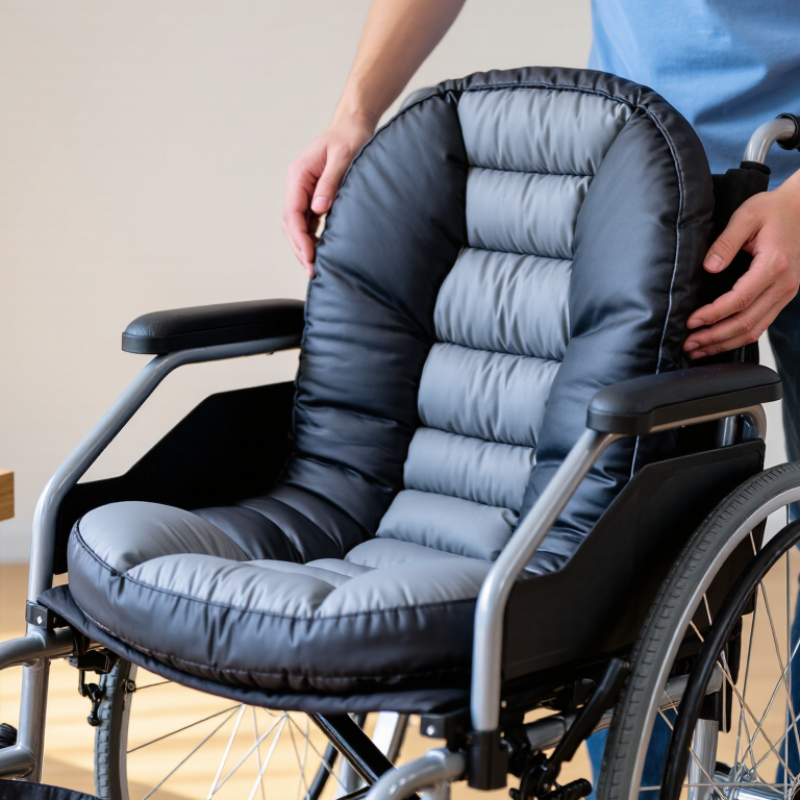
Advanced Air Cushion Technology

Superior pressure relief and anatomical positioning for enhanced daily comfort.

Walking Aids

Stella Lightweight Rollator

Ultra-lightweight mobility designed to give you freedom of movement every day.

0%

Choosing Therapeutic air cushions requires more than comparing prices, shapes, or advertised pressure ratings. A cushion sits beneath real people, often for many hours, under changing body weight, temperature, and moisture. WHO and UNICEF reported in the Global Report on Assistive Technology (2022) that more than 2.5 billion people need at least one assistive product. That number may exceed 3.5 billion by 2050. The market need is substantial.

But product selection remains personal.

Rory Cooper, PhD, a leading rehabilitation engineer and wheelchair researcher, has described the wheelchair as “an extension of the person.” His point applies to seating surfaces too. A cushion must work with the user’s posture, skin condition, transfer habits, wheelchair dimensions, and daily environment. Air-cell height, adjustable inflation, cover breathability, cleaning access, and maintenance support all matter. A cushion that feels soft in a showroom may become unstable during a long workday. Another model may protect vulnerable skin but complicate transfers.

Evidence should guide the decision. The International Guideline for Prevention and Treatment of Pressure Ulcers/Injuries, developed by EPUAP, NPIAP, and PPPIA, emphasizes individualized risk assessment and regular repositioning. It does not treat any cushion as a universal solution. That limitation deserves attention. Therapeutic air cushions can support pressure redistribution, but they cannot replace clinical assessment, correct wheelchair setup, or routine skin checks.

For global buyers, supply reliability matters too. Check regional sizing, valve standards, warranty terms, replacement-cell availability, and training documents. Ask for independent test data.

Small details matter. Ones often overlooked.

How to Choose Therapeutic Air Cushions for Global Buyers

Understanding Therapeutic Air Cushions and Their Main Applications

How to Choose Therapeutic Air Cushions for Global Buyers

Therapeutic air cushions support pressure redistribution during prolonged sitting. Their main applications include wheelchair seating, post-surgical recovery, elderly care, and workplace prevention. The WHO and UNICEF Global Report on Assistive Technology estimates that more than 2.5 billion people need assistive products worldwide. This figure may exceed 3.5 billion by 2050. Demand is growing, but product selection still requires clinical judgment.

Buyers should examine cell structure, inflation control, weight capacity, and surface stability. Larger air cells can improve immersion, while smaller cells may offer firmer positioning. Adjustable pressure matters for users with changing body weight or skin sensitivity.

The 2019 international pressure injury guideline recommends regular repositioning and individualized support surfaces. An air cushion cannot replace these practices. Not even close.

Climate and maintenance also influence real-world performance. In humid regions, breathable covers and easy cleaning reduce moisture-related discomfort. In remote markets, manual inflation options may be more dependable than electronic pumps. Check repair kits, valve quality, warranty terms, and local service access before purchasing. A cushion may perform well in testing yet fail during transport or daily transfers. The evidence is useful, but not perfect. Professional seating assessment remains important, especially for users with impaired sensation, pelvic asymmetry, or previous pressure injuries.

Assessing User Needs, Health Conditions, and Pressure-Relief Goals

How to Choose Therapeutic Air Cushions for Global Buyers

Choosing a therapeutic air cushion starts with the user, not the product catalogue. Ask how long the person sits daily, and whether transfers are independent. Check skin condition, sensation, posture, pelvic stability, and pain levels. A person with spinal cord injury may not feel early tissue damage. Someone with diabetes may need closer skin inspection.

The World Health Organization estimates that 2.5 billion people need assistive products globally. That figure may reach 3.5 billion by 2050 (WHO, Global Report on Assistive Technology, 2022).

Pressure-relief goals must be specific.

Is the priority preventing injury, managing an existing wound, improving comfort, or supporting posture? Cushion cell height, air distribution, immersion, and stability should match that goal. The user’s weight and cushion dimensions also matter. Too much air can reduce immersion. Too little air may create bottoming-out risk. A clinical assessment should include a pressure check and skin inspection after use. Useful evidence exists, but it is not perfect.

AHRQ reports that hospital-acquired pressure injuries affect about 2.5 million patients annually in the United States (AHRQ). This highlights the cost of missed prevention.

However, laboratory pressure maps cannot reproduce every home, wheelchair, climate, or transfer routine. Fit the cushion in the actual wheelchair. Recheck it after movement. Teach the user or caregiver to inspect inflation, valve security, and skin changes daily. Small details matter.

Availability of pumps, repair support, and clear instructions should also influence global purchasing decisions. A low price may become expensive when maintenance is impossible.

Comparing Cushion Materials, Designs, Sizes, and Support Features

Choosing a therapeutic air cushion starts with the user’s posture, skin condition, and daily routine. Air-cell cushions usually provide responsive pressure redistribution, while foam or gel layers can add stability and comfort. Material quality matters in hot climates, where breathable covers reduce moisture buildup. Look for durable, skin-friendly surfaces and sealed seams. A small leak can change support quickly.

Design affects how the cushion manages movement. Individually adjustable air cells allow targeted pressure changes, but they require regular checking. Contoured designs may improve pelvic alignment, while flatter designs can suit users who transfer often. A non-slip base helps prevent shifting. Some models include hand pumps, washable covers, or pressure indicators. These features are useful, but extra parts can complicate daily care. Simpler is sometimes better.

Size should match the wheelchair or seating surface without folding over the edges. Measure width, depth, and available height before ordering. The user’s weight range also matters, especially for adjustable air chambers. During evaluation, check whether the hips stay centered and whether the feet remain stable. Ask for professional seating advice when posture or pressure injuries are concerns. Do not assume maximum inflation offers maximum protection. Overinflation can feel hard and reduce immersion. Underinflation may cause instability. Recheck pressure after temperature changes, long journeys, and several weeks of use. One honest limitation remains: no cushion suits every body, climate, or care routine.

How to Choose Therapeutic Air Cushions for Global Buyers

Comparing cushion materials, designs, sizes, and support features

The chart shows indicative tensile-strength ranges commonly associated with flexible cushion construction materials. Higher tensile strength can support durability, but comfort, airtightness, weld quality, flexibility, and long-term pressure stability are also important. Buyers should match the material with the intended design, user weight, climate, and cleaning requirements.

Material Selection

TPU and flexible PVC are widely used for inflatable air-cell structures. TPU is typically lighter and more flexible, while PVC can offer a cost-effective solution. Confirm biocompatibility and skin-contact requirements for clinical use.

Design Comparison

Multi-cell designs can provide more localized immersion and adjustment. Single-compartment designs are simpler to inflate and maintain but may provide less independent pressure control.

Size and Support

Common wheelchair cushion widths are approximately 16–22 inches (41–56 cm), with depths often around 16–18 inches (41–46 cm). Select a size that fits the seat without excessive overhang and verify the user’s weight range.

Key Support Features

Evaluate adjustable air pressure, repair kits, non-slip covers, washable materials, contouring, lateral positioning, pressure-distribution performance, and compliance with applicable medical-device regulations.

Checking Safety Standards, Maintenance Needs, and Product Durability

When global buyers assess therapeutic air cushions, safety documentation should come before price. ISO 16840-2 evaluates physical and mechanical characteristics for tissue protection. ISO 16840-3 examines static, impact, and repeated-load performance. Ask suppliers for current test reports, material specifications, and traceable production records. ISO 10993 evidence can help assess skin-contact materials, especially for users with fragile skin. Requirements vary by destination, so confirm local medical-device rules before importing.

Maintenance determines real-world safety. The 2022 WHO Global Report on Assistive Technology estimates that more than 2.5 billion people need assistive products, with demand exceeding 3.5 billion by 2050. That scale makes simple servicing essential. Buyers should check whether users can measure pressure, repair small leaks, and clean covers without damaging valves. Daily visual checks, correct inflation, and routine skin inspection should be realistic for caregivers. Not every user can manage a complex pump system.

Durability needs evidence, not confident wording. Request fatigue-test results, seam-strength data, replacement-part availability, and warranty conditions. A cushion may survive laboratory loading but fail in humid transport or rough daily handling. Test samples in real settings when possible. Small details matter: protected valves, washable covers, clear pressure markings, and spare repair materials. I would also question unusually long durability claims. Field performance often exposes weaknesses that brochures omit.

How to Choose Therapeutic Air Cushions for Global Buyers - Checking Safety Standards, Maintenance Needs, and Product Durability

Evaluation Dimension Single-Compartment Air Cushion Multi-Compartment Air Cushion Cellular Air Cushion Powered Alternating-Pressure Cushion Buyer Verification Point
Primary therapeutic purpose Basic pressure redistribution and immersion for seated users. Pressure redistribution with improved lateral stability and localized adjustment. Air-cell support designed to reduce sustained loading and improve ventilation around the seating surface. Regular changes in air pressure generated by a pump for users requiring dynamic pressure management. Match the cushion to the clinical assessment, user posture, sitting duration, and risk of pressure injury.
Pressure adjustment Usually adjusted manually through a valve; simple but less zone-specific. Separate zones can often be adjusted for pelvic positioning, asymmetry, or comfort. May require individual cell or zone adjustment; correct inflation is essential for stability. Pump settings control the pressure cycle, duration, and operating mode. Request inflation instructions, pressure ranges, adjustment limits, and user training materials.
Relevant safety standards Consider testing under ISO 16840-2 for wheelchair seat-cushion physical and mechanical characteristics, where applicable. Consider ISO 16840-2 and applicable load, stability, and mechanical performance testing. Check material safety documentation and applicable wheelchair seating performance tests. In addition to cushion testing, powered units should be assessed against applicable medical electrical safety and electromagnetic compatibility requirements, such as IEC 60601-1 and IEC 60601-1-2. Verify the exact standard edition, test scope, certificate holder, and target-market regulatory requirements; do not rely only on a “CE” or “FDA” statement.
Biocompatibility and skin contact Cover and surface materials should be suitable for prolonged skin contact and easy to inspect. Use breathable, low-friction cover materials where clinically appropriate. Cell geometry should not create excessive shear, edge pressure, or trapped moisture. Check both cushion materials and pump-contact materials for skin-contact suitability. Request a biological evaluation or material declaration aligned with ISO 10993 when required by the destination market.
Cover cleaning Prefer a removable, washable, fluid-resistant cover with a secure zipper or closure. Use a cover that can be removed without damaging valves or individual air chambers. Clean cell surfaces and cover according to the supplied instructions; avoid harsh chemicals unless approved. Clean the cover and pump separately; keep electrical connectors and tubing dry. Confirm washing temperature, disinfectant compatibility, drying method, and whether replacement covers are available.
Leak detection and daily inspection Inspect the valve, seams, and pressure retention regularly; a slow leak may not be visible. Check each compartment independently because one leaking zone can alter posture and pressure distribution. Inspect cells, connecting tubes, and attachment points for punctures, splits, or deformation. Check pump alarms, tubing, power supply, filter condition, and backup inflation procedure. Ask for a written inspection checklist and a defined response time for loss of pressure or pump failure.
Durability factors Fewer components can simplify maintenance, but a single puncture may affect the entire support surface. Multiple chambers can provide redundancy, but more valves and seams create additional inspection points. Durability depends on film thickness, weld quality, cell geometry, and resistance to abrasion and repeated loading. Durability depends on both the cushion and the pump, including tubing, battery or power adapter, alarms, and moving parts. Request repetitive-load test data, seam or weld testing, material specifications, and documented quality-control procedures.
Repairability and spare parts Repair kits may be practical if approved patches and compatible valves are available. Individual chambers, valves, and covers may be replaceable depending on the design. Repair is often limited by bonded cell construction; replacement parts should be confirmed before purchase. Pump, tubing, filters, power adapters, batteries, alarms, and covers may require separate replacement. Confirm spare-part availability, service instructions, repair authorization, and support period in the destination country.
Load and dimensional suitability Must be correctly sized for the wheelchair seat and the user’s weight range. Appropriate sizing and zone configuration are important for pelvic alignment and stability. Check maximum user weight, cushion height, stability, and compatibility with the wheelchair frame. Confirm pump capacity, cushion dimensions, power requirements, and performance under the maximum rated load. Require dimensional drawings, tolerance information, maximum user weight, and compatibility limits before ordering.
Transport and storage Generally lightweight and suitable for travel when protected from sharp objects and excessive heat. More valves and compartments require careful folding and packing. Avoid folding methods that crease or stress welded seams; store clean and fully dry. Requires protection for the pump, power cable, tubing, and battery; consider voltage and plug compatibility. Check packed dimensions, shipping temperature limits, humidity limits, electrical plug type, and international transport documentation.
Fire and chemical resistance Surface and cover materials should meet the applicable flammability requirements of the destination market. Confirm cover and air-cell material performance separately because they may use different materials. Verify resistance to approved cleaning agents and compatibility with the intended disinfecting process. Check flammability, chemical compatibility, and electrical safety as separate requirements. Request test reports for the relevant market rather than assuming one country’s flammability requirement applies globally.
User safety controls Provide clear guidance on correct inflation, transfers, posture checks, and pressure changes. Include safeguards against uneven inflation between compartments. Check that cell height and inflation do not compromise transfer safety or wheelchair stability. Look for audible or visual alarms, power-failure instructions, and a manual backup mode. Obtain user instructions, contraindications, alarm meanings, emergency procedures, and caregiver training requirements.
Best selection priority Choose when simplicity, portability, and low maintenance are the main priorities. Choose when adjustable support and improved postural control are important. Choose when cell-level pressure distribution and ventilation are key requirements. Choose when dynamic pressure management is clinically indicated and reliable power and service are available. Use a documented clinical assessment, standards review, lifecycle-cost calculation, and local after-sales service check before purchase.
Buyer note: Standards and regulatory requirements differ by destination market and product classification. Ask the supplier for current test reports, risk-management documentation, cleaning instructions, warranty terms, spare-part availability, and evidence that the product has been evaluated for its intended clinical use.

Evaluating Global Suppliers, Certifications, Pricing, and Shipping Terms

How to Choose Therapeutic Air Cushions for Global Buyers

A reliable supplier should explain materials, air-cell structure, load limits, and cleaning instructions clearly. Ask for recent quality records, factory photos, sample units, and traceable batch information. Certifications matter, but a certificate alone proves little. Check its issuing body, product scope, expiry date, and test standards. Depending on the destination, buyers may also need medical-device registration, biocompatibility reports, or electrical safety evidence.

Pricing needs a wider view. Compare sample fees, tooling, minimum order quantities, packaging, inspection costs, and replacement policies. A low unit price can hide weak valves or expensive after-sales claims. Request a written quotation with currency, delivery time, payment terms, and validity period. In practical sourcing, I have seen buyers focus too heavily on price. That choice later created delays and extra testing costs. My own view is not perfect either; supplier reliability can be difficult to measure from documents alone.

Tips: Order samples from two or three suppliers. Test inflation time, pressure retention, noise, seam strength, and user comfort. Confirm whether prices include freight, insurance, duties, and local delivery. Agree on Incoterms in writing, such as FOB, CIF, or DDP, only after checking responsibilities. Air freight suits urgent, small shipments, while sea freight lowers cost for larger orders. Ask for carton dimensions and pallet details before booking space. Small details matter.

FAQS

What are therapeutic air cushions mainly used for?

They redistribute pressure during prolonged sitting. Common uses include wheelchair seating, recovery after surgery, elderly care, and workplace prevention. They support care. They do not replace repositioning.

How should buyers choose the air-cell structure?

Larger cells may provide deeper immersion and comfort. Smaller cells can offer firmer positioning. Adjustable cells help users with changing weight or skin sensitivity. The best structure depends on posture, sensation, and daily activity.

What cushion size is appropriate?

Measure the seating width, depth, and available height before ordering. The cushion should fit without folding over the edges. Keep the hips centered. Check that the feet remain stable.

Is maximum inflation safer or more protective?

No. Overinflation may feel hard and reduce immersion. Underinflation can create instability. Adjust pressure gradually and check it after temperature changes, travel, and several weeks of use.

Which materials and cover features matter in humid climates?

Breathable covers can reduce moisture buildup. Choose skin-friendly surfaces, sealed seams, and washable materials. A small leak matters. It can quickly change the support level.

What maintenance features should global buyers examine?

Check valve quality, repair kits, cleaning instructions, and replacement policies. Manual pumps may work better in remote areas. Electronic systems can add convenience, but they also add failure points.

How can buyers assess a supplier before ordering?

Request samples, recent quality records, factory photos, and traceable batch information. Test inflation time, pressure retention, seam strength, noise, and comfort. Documents help, but they are not complete proof.

What shipping and pricing details should buyers confirm?

Compare sample fees, minimum order quantities, packaging, inspection costs, and delivery time. Confirm freight, insurance, duties, and local delivery in writing. Air freight suits urgent small shipments. Sea freight usually costs less for larger orders.

Do certifications guarantee product quality?

Not by themselves. Check the issuing body, product scope, expiry date, and test standards. Some markets may require registration or safety evidence. A certificate can still leave practical problems unresolved.

When is professional seating advice necessary?

It matters for impaired sensation, pelvic asymmetry, or previous pressure injuries. A professional can assess posture and pressure distribution. No cushion suits every body. That limitation deserves attention.

Conclusion

Choosing the right Therapeutic air cushions requires a clear understanding of their purpose and intended use. These cushions are designed to support pressure redistribution, improve sitting comfort, and assist users with different health conditions or mobility needs. Global buyers should first evaluate the user’s posture, weight, daily activities, pressure-relief goals, and any specific clinical requirements. They should then compare materials, air-cell structures, cushion shapes, sizes, adjustable support features, and compatibility with wheelchairs or other seating systems.

Product safety and long-term value are equally important. Buyers should check applicable safety certifications, construction quality, inflation and adjustment systems, cleaning instructions, repair options, and expected durability. When comparing international suppliers, it is essential to review technical documentation, production consistency, order quantities, pricing, warranty terms, packaging, delivery schedules, and shipping conditions. A careful assessment of user needs, product performance, supplier reliability, and total purchasing costs can help global buyers select a safe, comfortable, and practical cushion solution.

Clara

Clara

Clara is a professional marketing specialist dedicated to helping businesses understand products, markets, and customers with greater clarity. With a strong command of the company’s solutions, she regularly creates and updates insightful blog articles for the company website, transforming complex......