Enterprise Manufacturing Benchmark & Technical Engineering Excellence
In the rapidly changing medical device landscape, selecting a certified Walking Aid Manufacturer & Factory requires far more than comparing basic unit prices. Modern institutional procurement officers, medical equipment distributors, and clinical buyers demand rigorous adherence to mechanical engineering standards, material purity, regulatory compliance, and post-market supply continuity. Our manufacturing enterprise is built upon a quarter-century of metallurgical mastery, biomechanical research, and precision fabrication processes.
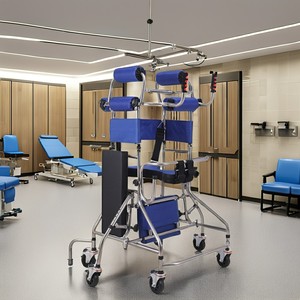
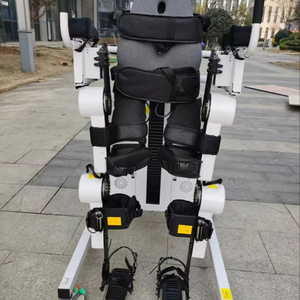
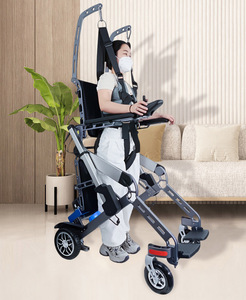
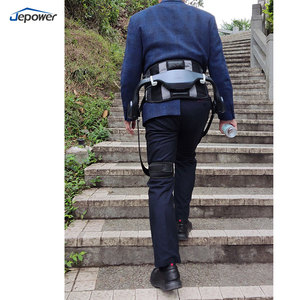
Every walking aid, rollator frame, and rehabilitation exoskeleton produced within our facilities undergoes stringent structural stress testing. Utilizing premium 6061-T6 aluminum alloys, high-tensile 304/316 stainless steel matrices, and medical-grade anti-bacterial thermoplastic coatings, our products deliver exceptional weight-to-strength ratios. By blending robotic MIG welding with automated CNC tube bending, we eliminate structural weak points, ensuring zero frame deformation even under dynamic load stress exceeding 1500 N (330 lbs static load threshold).
Amylior Factory Advantage: Quality Assurance & Clinical Innovation
Immersed in an industry where human independence and physical safety are non-negotiable, our manufacturing operations hold themselves to the highest global quality benchmarks. True innovation lies not only in the creativity of a design, but in its proven capacity to deliver measurable real-world clinical outcomes.
Our relentless investment in research and development has established breakthrough suspension mechanics for power mobility equipment, state-of-the-art featherlight composite frames for senior rollators, and advanced ergonomic contours for therapeutic seating systems. Supported by our North American engineering headquarters and robust global logistics hubs in QC, Canada, and OH, USA, our factory infrastructure guarantees that every batch meets ISO 13485, FDA 510(k), and European CE MDR compliance metrics.
Frequently Asked Procurement Questions (FAQ)
Clear answers to critical operational, regulatory, and logistics queries for international medical equipment buyers, hospital supply agencies, and B2B distributors.
1. What quality management systems and international certifications govern your walking aid production?
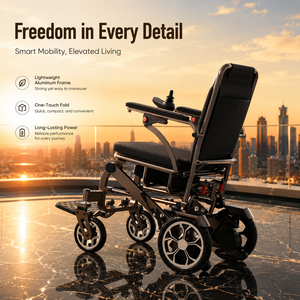
Our manufacturing facilities operate under full ISO 13485 medical device quality management standards. All product lines—including rollator walkers, electric folding wheelchairs, and wearable rehabilitation exoskeletons—comply with European CE Medical Device Regulation (MDR 2017/745), FDA 510(k) registration parameters, and EN 12182/ISO 11199 performance testing requirements.
2. Do you support private label OEM/ODM manufacturing and custom frame modifications?
Yes. We provide complete OEM/ODM engineering services. Our R&D team can customize frame geometry, load-bearing capacities, color anodization, logo laser etching, hand grip ergonomics, and packaging configurations according to your brand's technical specifications and regional regulatory requirements.
3. What is the Minimum Order Quantity (MOQ) for wholesale procurement orders?
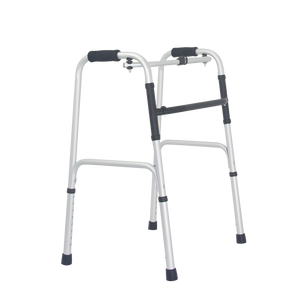
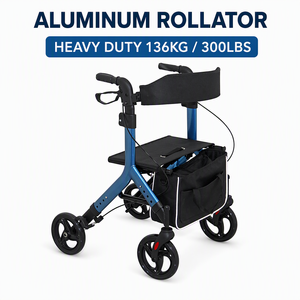
Standard wholesale MOQ for manual aluminum folding walkers and senior rollators starts at 100 units per model. For complex electro-mechanical units such as powered exoskeletons and smart electric wheelchairs, our baseline MOQ starts at 10 to 20 units. Sample units for clinical evaluation and agency approval are available upon request.
4. How are structural frame stress tests and cycle longevity validated at your factory?
Every chassis design undergoes automated multi-axis stress testing in our quality lab. Frame joints are subjected to a minimum of 100,000 continuous stress cycles under a dynamic load 1.5 times the maximum rated weight capacity. Brakes, folding latches, and wheel casters are tested across irregular terrain simulation tracks to ensure zero failure rates in hospital environments.
5. What battery safety standards apply to your motorized wheelchairs and exoskeletons?
All motorized walking aids utilize certified high-density lithium-ion or LiFePO4 batteries equipped with intelligent Battery Management Systems (BMS) for overcharge, short-circuit, and thermal protection. Batteries carry UN38.3, MSDS, and IEC 62133 air cargo transit certifications, guaranteeing smooth customs clearance for international sea and air shipments.
6. What is the standard lead time for mass production and international freight dispatch?
Standard production lead time for full container loads (FCL 20ft/40ft HQ) ranges from 30 to 45 calendar days upon deposit confirmation and sample sign-off. Custom OEM orders requiring specialized tooling or bespoke electronic firmware tuning require 45 to 60 days. Expedited air shipments for sample testing are dispatched within 7–10 days.
7. How does your factory handle spare parts availability and after-sales component replacement?
We maintain a guaranteed 10-year component supply lifecycle for all manufactured models. We provide replacement caster wheels, brake cables, electronic controllers, push-buttons, and seating pads shipped directly from our primary factory hubs or North American logistics centers in Columbus, OH, and Quebec, Canada.
8. Can your walking frames accommodate bariatric patient requirements?
Yes. We produce heavy-duty bariatric walking aids featuring reinforced dual-crossbar aluminum frames, widened seating bridges, and heavy-duty 8-inch solid caster wheels rated for dynamic weight capacities up to 227 kg (500 lbs).
9. What warranty protection is provided for commercial mobility distributors?
We provide a comprehensive 5-year limited structural warranty on all metallic chassis frames (aluminum and stainless steel) and a 1-to-2-year limited warranty on electronic components, motors, controllers, and battery modules. Defective components under warranty are replaced free of charge with express shipping.
10. How can global buyers initiate factory audits or schedule virtual facility inspections?
Distributors and institutional buyers can request on-site facility visits or schedule live HD virtual factory walkthroughs by connecting directly with our engineering sales desk via the inquiry button below. Our team provides complete factory audit documentation, ISO certificates, and compliance test reports prior to contract execution.
Empowering Human Independence Through Manufacturing Mastery
Behind our advanced robotics, automated CNC machinery, and high-efficiency assembly lines is an exceptional workforce dedicated to improving lives. We foster an organizational culture that values technical precision, continuous R&D education, and empathetic design thinking. Every engineer, welder, quality inspector, and logistics coordinator is united by a shared mission: building mobility solutions that users can trust without hesitation.
Whether developing specialized pediatric gait trainers, high-performance power wheelchairs, or lightweight aluminum senior rollators, our manufacturing philosophy remains unwavering: quality is not an act, but an engineered habit. As we expand our global footprint across North America, Europe, and Asia-Pacific, we invite international healthcare partners to join us in shaping the future of mobility care.